
In this Article
- Weekend Overview & Main Food Stops
- Friday Evening: Arrival and Classic Brasserie Introductions
- Saturday Morning: Historic Markets and Seafood Staples
- Saturday Evening: The Definitive Moules Frites Experience
- Sunday: Culinary Souvenirs and a Farewell Seafood Brunch
- Itinerary Scope and Seasonal Limitations
Weekend Overview & Main Food Stops
A good Brussels food weekend needs restraint. The city can feed you heavily by noon on Saturday if you let every brasserie window make the decision for you.
I build this route around one seafood anchor per day: a short brasserie introduction on Friday, market and counter seafood on Saturday morning, moules frites on Saturday evening, then a lighter Sunday brunch before souvenirs. That rhythm leaves room for appetite, walking, and the small pauses that make Belgian food travel feel human rather than scheduled to exhaustion. According to local expertise, the windows below keep the weekend workable.
The Weekend Eating Plan
- Friday dinner window: 18:30-21:00, with a classic brasserie starter rather than a long tasting menu.
- Saturday market walk: 09:30-12:00 around the Sainte-Catherine area and nearby seafood counters.
- Saturday moules frites dinner: 19:00-21:30, seated and unhurried.
- Sunday brunch and shopping: 10:30-13:30, then back for luggage before a mid-afternoon departure.
Must-Eat Checklist
- 2 grey shrimp croquettes as the opening brasserie order.
- 1 pot of moules marinières with frites as the main weekend meal.
- 1 small tasting of local blonde beer or gueuze with seafood.
- Oysters or whelks at a standing seafood counter, if the counter is open and turning fresh shellfish.
Key point: Treat Brussels as an inland capital with a coastal memory. The best weekend balances Grand Place atmosphere, North Sea shrimp, Zeeland mussels, and the old fish-market character around Sainte-Catherine.
For broader city context, the official Brussels food and drink guide is useful before you start narrowing restaurants and market stops.
Friday Evening: Arrival and Classic Brasserie Introductions
The first mistake I see on Brussels food weekends is planning a grand dinner after a train, airport transfer, hotel check-in, and bag drop. By the time the menu arrives, the guest wants comfort, not ambition.
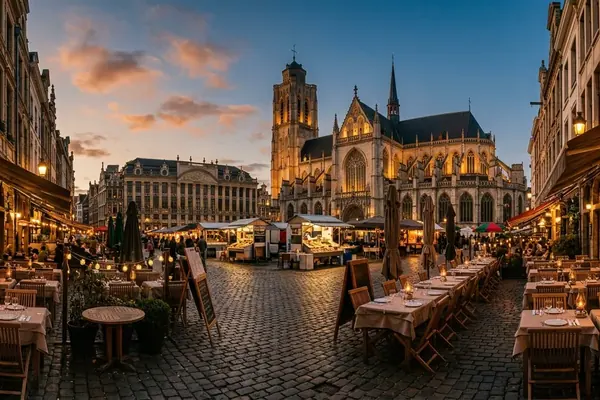
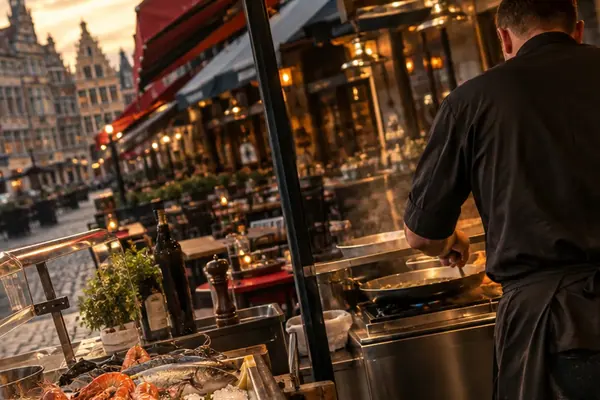
Keep Friday central. Check in by 18:00-18:45, then walk toward the Grand Place or the Sainte-Catherine quarter by 19:00. Order your starter around 19:30. A historic brasserie room does more work on the first night than a complicated reservation across town.
Start with Grey Shrimp Croquettes
The opening order should be croquettes aux crevettes grises. A typical plate brings 2 pieces, often with fried parsley and lemon. Split one open before you squeeze the lemon: the center should steam, the filling should sit loose and creamy, and visible grey shrimp should appear in the béchamel.
A perfectly smooth filling with no shrimp pieces may still be edible, but it misses the North Sea character this itinerary is built around.
Pair the Bite, Not the Whole Evening
With croquettes, choose a modest beer instead of turning Friday into a pub crawl. A 25 cl Belgian blonde gives a cleaner malt profile against the fried crust. If the croquettes are especially buttery, a gueuze bottle in the ballpark of 37.5 cl shared between two people brings sharper acidity and a better lift.
Ordering tip: Stop after the starter, one main if you truly need it, and one beer. A realistic brasserie dinner still takes 90-120 minutes, and Saturday needs a fresh palate.
Saturday Morning: Historic Markets and Seafood Staples
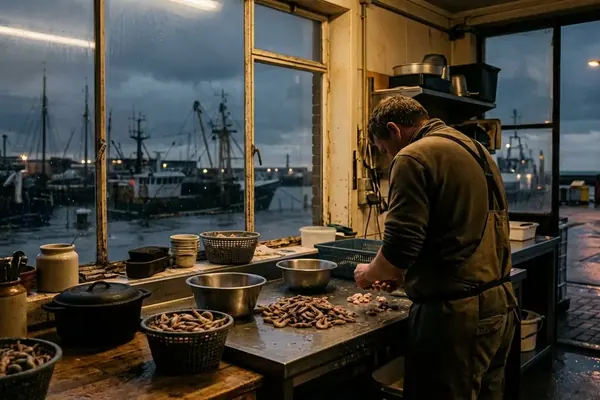
Saturday morning belongs to Sainte-Catherine because the area still carries the practical memory of Brussels’ fish-market district. The city is inland, but this neighborhood explains why seafood feels natural in the capital rather than imported as a novelty.
Start near Sainte-Catherine around 09:30. Spend 30-45 minutes looking before eating. The present-day experience depends on the weekday, opening hours, and whether counters are operating before lunch, so do not treat this as a fixed museum route.
What Fresh Looks Like
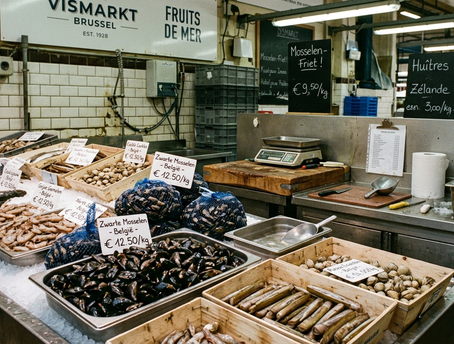
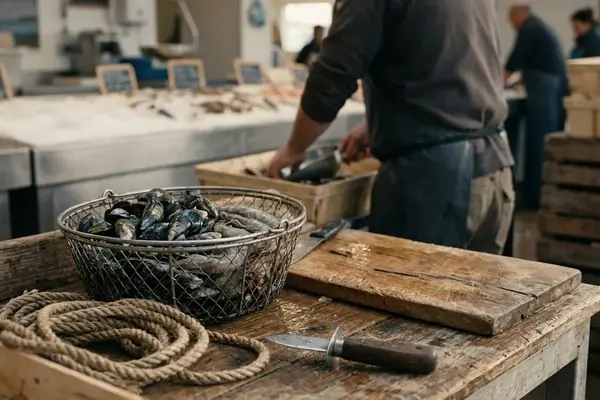
Brussels chefs look for clean-eyed whole fish, firm fillets without gaping, grey shrimp with a fresh briny smell, and mussels of broadly even size so they steam at the same pace. For mussels, the shell tells most of the story. They should be closed, or close when tapped.
Avoid trays with cracked shells, pooled cloudy liquid, or a strong ammoniac smell. That is not a matter of preference; it is a signal to keep walking.
The Standing Counter Stop
Between 10:30 and 11:30, stop for oysters or whelks if the counter looks active. Common portions are 3 or 6 oysters per person, or 100-150 g of whelks with a small pick and mayonnaise or a peppery sauce.
This is not brunch yet. It is a palate check. You taste salt, texture, and freshness before the heavier Saturday evening pot arrives.
Planning risk: Do not over-order at the counter. Shellfish opened to order can make a 45-minute stop stretch toward 75 minutes, and lunch-sized portions will dull the moules frites dinner.
Saturday Evening: The Definitive Moules Frites Experience
Saturday evening gets the main event because moules frites rewards appetite and time. Plan for a 19:00-19:30 seating. After 20:15, popular brasserie kitchens often slow down as shellfish, steak frites, and large groups overlap.
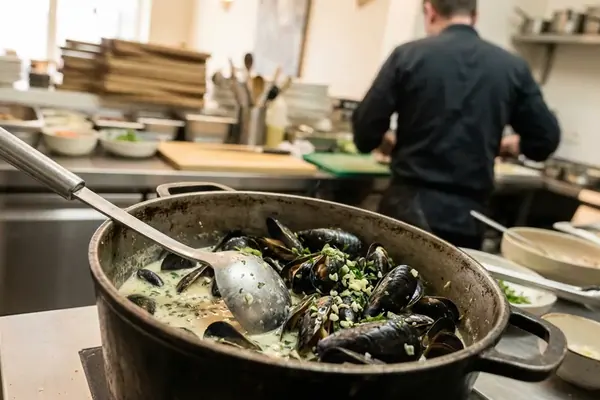
Order moules marinières if you want the classic version. Cream has its place in other versions, but it is not required for the classic pot.
The Anatomy of a Proper Pot
- Mussels: commonly hovering around 1-1.2 kg per person before shell weight for a main-course pot.
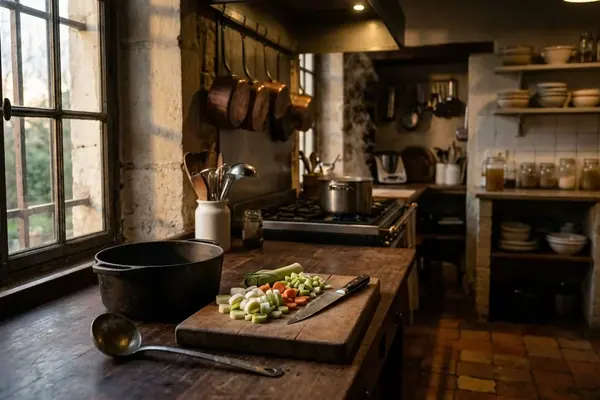
- Aromatics: sliced celery with onion or shallot.
- Fat: butter, used for depth rather than heaviness.
- Liquid: dry white wine and the mussels’ own cooking liquor.
- Finish: parsley and black pepper.
- Frites: served separately so they stay crisp.
Once the aromatics and wine are hot, steaming usually takes 6-9 minutes. The mussels should open, plump, and just detach from the shell. Shrunken meat tells you the pot stayed too long over heat.
Choosing the Right Restaurant
Do not choose the restaurant by the tallest photograph of a mussel pot near the door. Look for quieter signals: the menu mentions origin or season, the staff can say whether mussels are available that week without sounding surprised, and frites arrive in a separate cone or bowl.
A menu offering fresh moules frites every month of the year without origin, season, or staff explanation is a weak signal, especially in late spring.
Ordering tip: Ask one plain question before ordering: “Are the mussels good this week?” A confident, specific answer matters more than a decorative seafood display.
Sunday: Culinary Souvenirs and a Farewell Seafood Brunch
Sunday should feel lighter. After a Saturday pot of mussels and frites, I prefer a seafood-heavy brunch built from smaller plates: oysters if available, grey shrimp on toast, or a simple fish dish that does not try to compete with the night before.
The timing is practical. Brunch between 10:30 and 12:30, shop from 12:00 to 13:30, then return to the hotel for luggage. That leaves room for a mid-afternoon train or flight without dragging bottles through a final meal.
What to Bring Home
- Artisanal mustard: useful with frites, sausages, and cold seafood plates. Keep carry-on containers within 100 ml; larger jars belong in checked luggage.
- Local beer: bottles are commonly sold in 33 cl or 75 cl formats. Wrap each bottle separately and keep it away from the outer edge of checked luggage.
- Seafood spices: pepper blends for shellfish, dried seaweed salt, or a seasoning mix for a home version of moules marinières.
- Recipe cards: light, durable, and often more useful than a jar that leaks in transit.
The Flavor You Should Remember
The weekend should leave you with a clear line of flavor: buttery croquette, briny counter shellfish, celery and wine rising from a mussel pot, crisp frites, mustard heat, and beer acidity. That is the appeal of Belgian coastal cuisine in Brussels. It does not need to be delicate to be precise.
Kitchen note: The best souvenir is the cooking logic: seafood first, sauce second, frites protected from steam, and beer used as a pairing rather than a distraction.
Itinerary Scope and Seasonal Limitations
This itinerary is deliberately narrow. It focuses on traditional Brussels seafood, brasserie culture, markets, croquettes, and moules frites. It bypasses modern fusion menus and Michelin-style fine dining because those require a different weekend structure.
Mussel Season Matters
Zeeland mussels are typically strongest for Brussels moules frites from July through early April. Late spring is often the weakest period for a classic mussel-focused trip, and season openings can shift by roughly 2-3 weeks depending on water temperature, mussel size, and harvesting conditions.
For this mussel-led route, timing is not a decorative detail. Travelers visiting from late April through June may need to replace the Saturday centerpiece with grey shrimp croquettes, oysters, or another seasonal fish dish.
Opening Hours Can Break a Good Plan
Many traditional kitchens close between lunch and dinner, often after a last lunch seating around 13:30-14:00 and before reopening around 18:30-19:00. Sunday and Monday are the riskiest days for closed doors among traditional establishments.
Verify opening hours before you build the final route. Then verify them again on the day, especially for Sunday brunch and Monday spillover plans.
Planning risk: A perfect-looking itinerary can fail at the door. Reservations and same-day opening checks matter most for traditional seafood restaurants, where closures are common and kitchen hours are strict.
Comments
Start the discussion.
Join the Discussion