
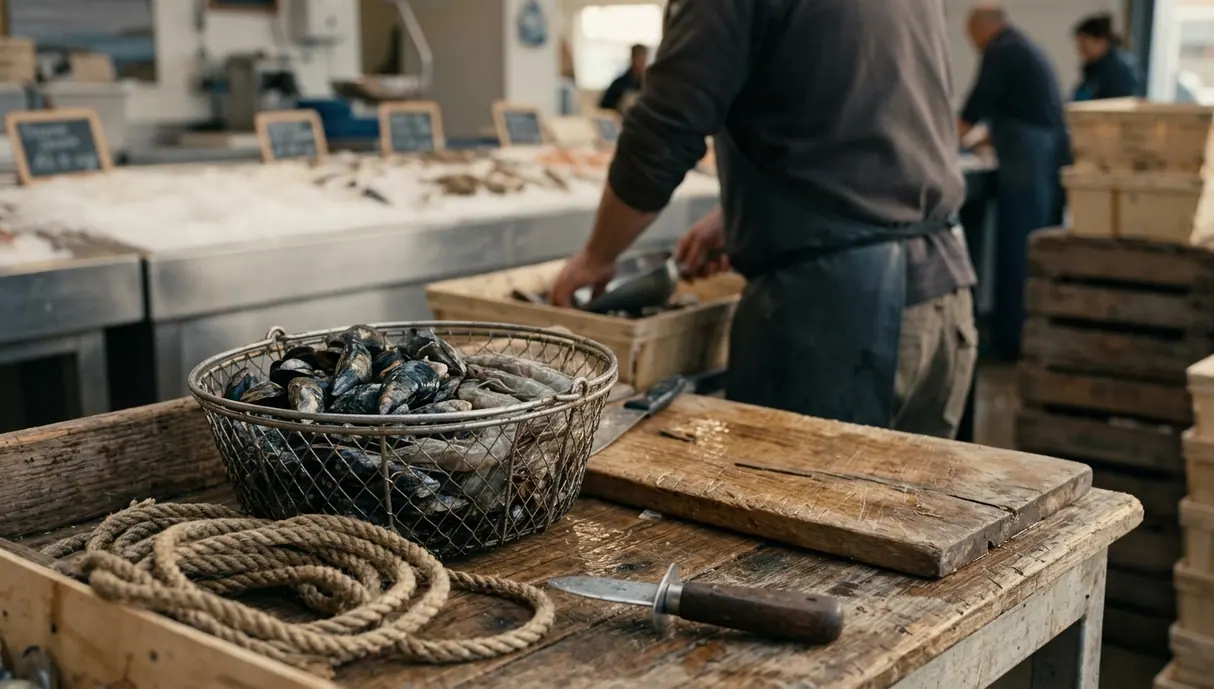
Belgian coastal seafood markets reward the traveler who arrives before the day has settled into tourism. I plan these stops the same way I plan a market-to-table lunch route: first the landing rhythm, then the vendor, then the kitchen.
According to local expertise, the useful window is narrow. For most culinary travelers, the strongest buying period is roughly 07:30 to 10:00. After pushing 10:30, stalls may still look busy, but the best small-lot grey shrimp, sole, and day-boat fish are more likely to be gone.
In this Article
- Key Takeaways for Belgian Seafood Markets
- The North Sea Catch: What to Look For
- Ostend's Vistrap: An Authentic Open-Air Market
- Zeebrugge: The Heart of the Commercial Fleet
- Practical Tips for Market Visitors
- Seasonal Constraints and Market Limitations
Key Takeaways for Belgian Seafood Markets
Start early, buy narrowly, and do not treat every full tray as proof of a better stall.
A stall with full trays hovering around 12:30 is not automatically stronger than a nearly sold-out stall at 09:30. Late abundance can mean the best local lots already moved earlier, or that the display includes broader wholesale stock. That is not dishonest; it is simply how seafood retail survives after the first wave of serious buyers.
Market note: The most Belgian seafood basket is not a vague mixed-fish order. Build it around grey shrimp, sole, small flatfish, mussels in season, and, when landings and price allow, turbot or brill.
Ostend and Zeebrugge give visitors the clearest coastal contrast. Ostend's Vistrap is the easier first stop because it sits within reach of the seafront and station district. Zeebrugge takes more intention; its value is less promenade romance and more a direct look at how commercial seafood moves toward restaurants and shops.
What to Prioritize on a First Visit
- Arrival time: Aim for the early market window rather than a leisurely late-morning browse.
- Local identity: Ask specifically for grey shrimp, sole, small flatfish, and seasonal mussels.
- Cooking plan: Buy only what your accommodation can keep cold and prepare properly.
- Market choice: Use Ostend for a straightforward walk-up experience and Zeebrugge for a dock-area supply-chain view.
The North Sea Catch: What to Look For
Belgian seafood buying depends less on one universal freshness rule and more on identifying the right species in the right condition. Names matter. So does the weight. The way the item has been held on the counter matters too.
Grey Shrimp
Belgian grey shrimp are small, brown-grey, and commonly sold cooked and unpeeled. They may look modest beside larger imported shrimp, but that is the point. Their flavor is concentrated, clean, and slightly sweet, with a shell aroma that belongs to the southern North Sea.
For a simple tasting, a 250-500 g portion is usually enough. If you plan to make shrimp croquettes or tomato-shrimp preparations, expect to buy closer to 750 g-1 kg unpeeled, because peeling sharply reduces the usable weight.
Sole and Other Flatfish
True sole should be labeled clearly as tong or sole. Look for a clean sea smell, firm flesh, intact skin, and a seller who can explain the fish without becoming vague. If the label says only platvis, or if fillets are priced unusually low, ask whether you are looking at true sole or another flatfish.
This is not snobbery. It affects the cooking. Sole takes quick heat and rewards restraint; some other flatfish tolerate different handling and should not be priced or planned as if they were the same fish.
Mussels on the Belgian Coast
Belgian moules-frites culture does not mean every mussel on a Belgian coast counter is Belgian-caught. Many excellent mussels sold and cooked in Belgium come from nearby Dutch or North Sea production areas.
Choose retail packs that are kept cold, damp, and closed. Avoid mussels sitting in warm display water. For a main course of moules-frites, plan in the ballpark of 1-1.2 kg per person, especially when the shells are large and the meal includes fries and sauce.
Ostend's Vistrap: An Authentic Open-Air Market
The Vistrap is the coastal market I use when a visitor has one morning and wants the process to feel legible: walk up, compare trays, ask the weight, buy something you can actually eat or cook.
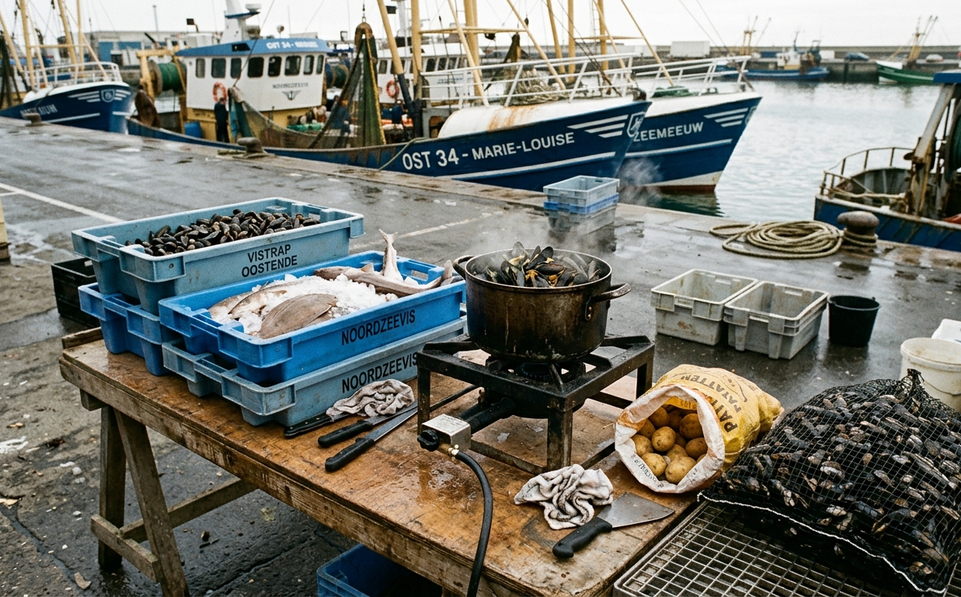
A typical visit takes 25-45 minutes if you compare two or three stalls, ask for cooking advice, and photograph the harbor area without blocking regular buyers. Arriving between 08:00 and 09:30 gives the best balance of choice and atmosphere. By late morning, the display may lean toward sturdier fish, pre-packed items, or whatever was landed in greater volume.
Check the official Vistrap market schedule before building your day around it, especially if weather has been rough or your itinerary depends on onward trains.
How to Buy Without Overcomplicating It
For a portable tasting, ask for a small weighed amount of cooked grey shrimp. If you have a rental kitchen, a modest fillet portion is more practical than a whole flatfish unless you have cold storage, a knife, and a plan for bones and skin.
Ordering by weight is direct. Use een halve kilo in Dutch or un demi-kilo in French for 500 g. Always confirm whether the quoted price is per kilogram or for the weighed portion.
At the counter: At the Vistrap, buy the smallest portion that lets you taste well. A focused grey shrimp purchase teaches more than an overambitious bag of fish you cannot store.
Why the Vistrap Matters Culturally
The Vistrap is not just a retail counter. It keeps the Belgian coast's fishing identity visible in a city that also serves beach crowds, weekend visitors, and restaurant diners. The market shows the practical side of that culture: short conversations, quick decisions, and seafood sold close to the water rather than hidden behind a menu description.
Zeebrugge: The Heart of the Commercial Fleet
Zeebrugge should not be presented as a simple walk-up fish market in the same way as Ostend's Vistrap. Its authenticity is commercial and logistical. The useful visitor experience depends on nearby vendors, dock-adjacent counters, and the ability to ask what came through the auction flow that morning.
Plan Zeebrugge as a 60-90 minute targeted stop, not an open-ended wander. The auction halls themselves are not the point for most travelers. The better move is to visit fish shops and boutique vendors near the port and ask two questions: what was landed locally today, and what arrived through wider wholesale channels?
What the Port Teaches
Zeebrugge explains why fish bought through coastal distribution can appear in Brussels restaurants the same day or the next service. The road movement from Zeebrugge to central Brussels is roughly 100-115 km, which is practical when seafood is handled through chilled transport.
The visible catch changes with landing patterns. Flatfish, gurnard, cod-family fish, squid, and shellfish may appear depending on season, weather, and quota availability. Do not arrive with a fixed species list and call the stop disappointing when the sea has offered something else.
How to Read Boutique Vendors Near the Docks
A good dock-area vendor will distinguish between local landings and wider wholesale stock without making the conversation theatrical. That distinction matters. Both can be high quality, but they tell different stories about the coast.
If a vendor says a fish came through the broader wholesale channel, listen for practical details: when it arrived, how it has been held, and whether it should be cooked today. That answer is more useful than a romantic claim about the boat.
Practical Tips for Market Visitors
The sequence of a good market visit is simple: money, cold transport, ordering language, then cooking logistics. Get those wrong and the quality of the fish becomes a secondary problem.
Money and Payment
Carry small euro notes and coins for purchases in the 5-30 euro range. Even when cards are accepted, cash is faster at traditional counters during the morning rush. A failed payment can end the purchase just when the stall has the item you came for.
Cold Transport
Use an insulated bag with one or two frozen gel packs if seafood will be out of refrigeration for more than 30-45 minutes. This matters more during late spring and summer coastal visits, when the walk back to a hotel or apartment can quietly damage texture and aroma.
Cold-chain note: Fresh seafood declines quickly once it leaves the counter. If you cannot keep it cold, buy a tasting portion to eat soon rather than a dinner quantity for later.
Cleaning, Filleting, and Useful Phrases
Ask for fish to be cleaned or filleted at purchase time if you are cooking in a rental apartment. Otherwise, you may need a sharp filleting knife, a fish scaler, and a waste plan for bones and heads. Most holiday kitchens are not set up for that work.
- per kilo? Use this to confirm pricing by kilogram.
- schoongemaakt? Ask this when you want the fish cleaned.
- gepeld? Use this for peeled shrimp.
- voor vandaag Say this to signal that you plan to cook it the same day.
Keep the conversation short and precise. Vendors are more helpful when they can see you understand weight, timing, and storage.
Seasonal Constraints and Market Limitations
Seafood markets are not fixed displays. They are the visible edge of weather, regulation, demand, and the previous night's work.
After several consecutive days of strong North Sea winds, small-boat landings can shrink sharply. The counter may show fewer local day-boat labels and more reliance on wholesale or imported stock. That does not make the market useless, but it changes what you should buy.
Weather, Quotas, and Month-to-Month Variation
Grey shrimp and flatfish availability can change noticeably from month to month. A September visit may feel very different from a February visit even at the same stall. European quota and landing rules also affect what reaches counters, especially for pressured commercial species; a missing fish is not automatically a sign of a poor market.
This is where rigid itineraries break. Coastal markets are strongest for visitors who can adapt their meal plan on the spot rather than insisting on one exact species.
A Better Way to Finish the Visit
Ask what should be cooked today, not what is famous. If the answer is grey shrimp, buy grey shrimp. If the answer is a small flatfish you did not plan for, let the route bend. Belgian coastal seafood is at its best when the meal follows the landing rather than the brochure.
That approach keeps the day honest. It also leaves room for the kind of simple plate that stays with you: warm mussels, crisp frites, a paper packet of shrimp, or a sole cooked plainly enough that the coast still speaks through it.


Comments
Start the discussion.
Join the Discussion