
Belgian seafood has a calendar, and the best Brussels kitchens respect it. I do not mean a decorative calendar printed beside the bar. I mean the practical one: when mussels arrive with weight in the shell, when grey shrimp smell sweet instead of tired, and when flatfish justify their price.
The month is never the only test. A Brussels restaurant can serve excellent mussels in late July while another serves tired mussels in October; shell closure, smell, and turnover still decide quality. Still, season gives you the first filter before you order.
In this Article
- Quick Guide: When to Eat Belgian Seafood
- Mussel Season: The 'R' in the Month Rule Explained
- Grey Shrimp: The Caviar of the North Sea
- Prime Catch: Sole, Cod, and Turbot Seasons
- Understanding Catch Limits and Sustainability
- How to Spot Seasonal Authenticity in Brussels
Quick Guide: When to Eat Belgian Seafood
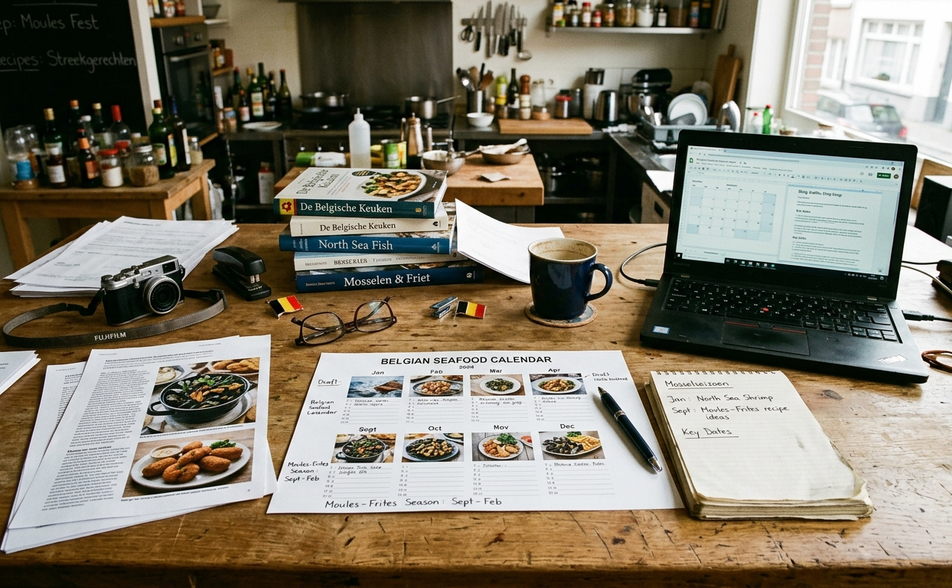
I treat the Belgian seafood calendar as a buying tool, not folklore. The question is simple: when are diners most likely to see strong supply, clean texture, and honest local sourcing on a Brussels menu?
According to local expertise, the short answer is this: mussels dominate from the second half of July into spring, grey shrimp are at their best in autumn, and white fish needs to be judged species by species. “White fish” is too broad a label for serious ordering.
Seasonal highlights at a glance
- Mussels: strongest restaurant availability usually runs from mid-July through April, with many Brussels brasseries promoting the new season from the second half of July.
- North Sea grey shrimp: the best buying window is September through November. Spring catches can appear, but autumn shrimp are usually fuller after summer growth.
- Dover sole: June through December is the most reliable eating window, when post-spawning flesh firms up and Belgian flatfish supply is steady.
- Cod, sold as cabillaud: best treated as a cold-month fish on Brussels menus, roughly November through March.
- Turbot: strongest fresh-menu window is late spring through summer, roughly April through August.
Eating in season comes closest to a flavor guarantee because the product has less working against it: shorter holding time, better natural condition, and a kitchen that can sell through volume quickly. That matters with shellfish more than diners realize. A slow mussel service leaves evidence in broken shells and weak aroma.
Worth knowing: Use the calendar as the first test, then let the plate confirm it. Fresh Belgian seafood should smell clean, cook clean, and taste specific to the species, not just salty.
Mussel Season: The 'R' in the Month Rule Explained
The old rule says to eat mussels only in months with an “R”: September through April. It came from a sensible place. Warm-weather transport, unrefrigerated storage, and weaker monitoring made May through August risky in older kitchens.
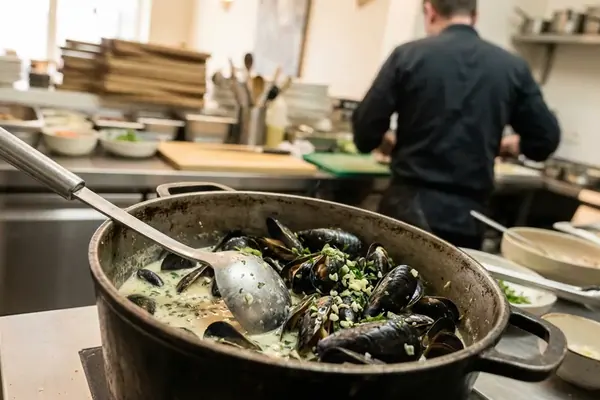
That rule is no longer precise enough for Belgian dining. Modern bottom-culture mussels from Zeeland and Belgian-facing North Sea supply commonly enter restaurants from July through April. In Brussels, the new season often becomes visible in the second half of July, when brasseries start pushing moules-frites again with confidence.
Why late spring is still tricky
Mussels often lose plumpness around the spawning period in late spring to early summer. A batch immediately after spawning can look generous in the shell and still cook up with thin, disappointing meat. This is why the shell size alone tells you very little.
I judge peak eating quality by meat-to-shell fullness, a clean briny smell, tightly closing shells, and cooking liquor that stays clear rather than muddy. Those are practical kitchen checks, not romance.
How long fresh mussels should wait
In a Brussels kitchen, fresh mussels should be cooked the day of delivery or the following day. Holding them much longer than a window hovering around 24 to 48 hours noticeably increases broken shells and weak aroma.
Ordering tip: Order mussels where turnover is obvious: busy lunch service, a short seafood board, and staff who know when the delivery arrived. A full pot in October is not automatically better than a well-handled pot in late July.
Grey Shrimp: The Caviar of the North Sea
Grey shrimp are often hidden inside croquettes in Brussels, but they deserve to be treated as a seasonal coastal product. North Sea grey shrimp, Crangon crangon, are available in Belgian markets for much of the year. Their prime window is September through November, when sweetness, volume, and shell-on presentation come together.
The autumn quality is tied to growth. After summer feeding in shallow coastal water, the shrimp tend to be fuller and more aromatic. A secondary buying period can occur from May through June, especially when spring weather is mild and coastal water warms steadily, but it is less dependable.
What makes autumn shrimp taste different
Good grey shrimp have a delicate, almost nutty sweetness. The shell carries aroma, which is why shell-on shrimp often taste more vivid than industrially peeled shrimp that may travel farther before reaching Brussels. For the best flavor, grey shrimp are commonly cooked very soon after landing.
The difference shows most clearly in simple preparations: hand-peeled shrimp with tomato, shrimp croquettes with a generous filling, or a small bowl served cold with a squeeze of lemon. Heavy sauces flatten the point.
Oostduinkerke and the tide clock
Traditional horseback fishing at Oostduinkerke is not an all-day spectacle. It is timed around low tide, with work concentrated in a narrow window of roughly 90 minutes before to 90 minutes after the tide turn.
That timing matters culturally and practically. The method belongs to a coastline where season, sand, horse, net, and tide meet in a very narrow operating rhythm. It is not a generic seafood story; it is a Belgian coastal craft with a clock attached.
Watch for: Grey shrimp croquettes offered year-round are not automatically suspect, but the filling may rely on frozen or industrially peeled shrimp unless the menu specifies hand-peeled or fresh shell-on supply.
Prime Catch: Sole, Cod, and Turbot Seasons
A single “white fish season” would mislead you. Dover sole, cod, and turbot behave differently in the market and on the plate, so I read them separately.
Dover sole: June through December
Dover sole, Solea solea, is best enjoyed from June through December. After spawning, the flesh firms up, and the fish suits the Belgian flatfish tradition: whole, on the bone, cooked cleanly, and served without too much theatre.
For whole sole, look for clear eyes, red-pink gills, and a firm belly line. At delivery, good flatfish should have stiffness, bright slime on the skin, and no ammonia smell at the gill plate.
Cod: November through March
Cod, sold on Belgian menus as cabillaud, earns its place in colder months. From roughly November through March, fillets tend to be thicker, whiter, and less watery.
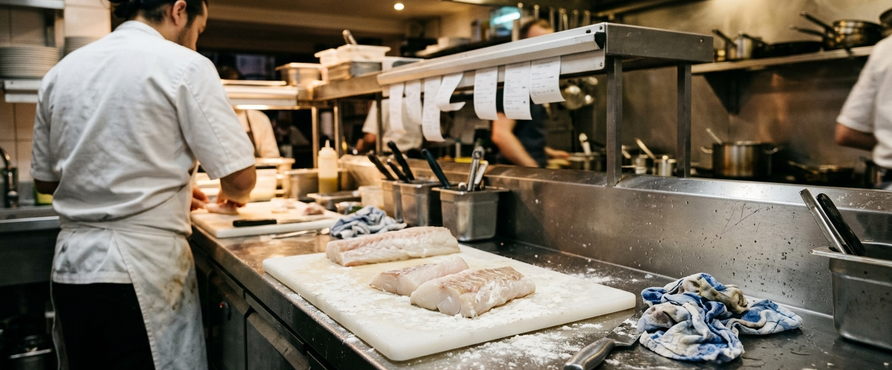
This is where menu language can help. A confident kitchen may describe the cut or preparation clearly because the fish can stand on its own. Vague “white fish fillet” in winter might still be fine, but it gives you less to judge.
Turbot: April through August
Turbot is the king of flatfish when handled properly. Its most convincing fresh availability for Brussels dining is April through August, especially when sold whole or as thick bone-in portions rather than anonymous skinless fillets.
Bone matters with turbot. It protects texture, carries gelatin, and gives the cook a better chance of serving a thick piece that flakes without drying. If the menu makes turbot sound strangely cheap or too available in every season, ask how it arrived in the kitchen.
Understanding Catch Limits and Sustainability
Seasonal availability is not only biology. It is also quota management, weather, auction timing, and the buying reach of Brussels wholesalers.
European catch opportunities are set on an annual cycle, with quota decisions for the following fishing year typically finalized in December. These rules shape what fleets can land and what chefs can honestly promote. The official framework for European Union fishing quotas and seasonal restrictions is not light reading, but it explains why availability can tighten even when a species feels seasonally familiar.
Spawning seasons deserve respect
Avoiding fish during sensitive breeding periods protects future supply. Cod pressure is highest in winter to early spring, sole spawning is mainly spring into early summer, and several flatfish need extra scrutiny during breeding months.
This is the part of seafood seasonality that rarely fits on a menu. A dish can be traditional and still poorly timed. A good kitchen knows the difference.
Why “Belgian” can mean several things
Belgian landings are concentrated through coastal auction channels such as Zeebrugge, Ostend, and Nieuwpoort. Brussels wholesalers may also buy from Dutch, French, or wider North Sea supply when local volume is low.
Here is the useful catch: “Belgian seafood” on a menu may describe the recipe, the wholesaler, or the restaurant tradition rather than a fish caught by a Belgian vessel. That does not make the dish dishonest, but it does change what you are verifying.
A stormy week on the North Sea can remove an in-season fish from honest menus for several services, while imported or frozen substitutes remain available. Small-vessel fish can disappear from Brussels menus for a stretch pushing 1 to 3 days even when the calendar says the species is in season.
Worth knowing: The most sustainable choice is not always the most local-sounding one. It is the fish that fits the season, the quota reality, and the kitchen’s actual supply route.
How to Spot Seasonal Authenticity in Brussels
Menu-reading is a verification process. First, match the species to the month. Then check whether the menu gives a port, fishing area, auction clue, or daily-board signal. Finally, ask one question and listen for a concrete answer.
What a credible seafood board looks like
A credible seasonal seafood board in Brussels usually lists a small number of changing items, often in the ballpark of 1 to 4 fish or shellfish specials. It should not look like every premium species arrived in perfect condition on the same morning.
Be cautious with “fresh Zeeland mussels” promoted heavily in May or early June without explanation. That timing sits outside the normal strong restaurant season. The same caution applies to turbot that appears everywhere, every week, as a neat skinless fillet with no mention of whole fish or portioning.
Questions worth asking
- Which port or auction did today’s fish come through?
- Was it landed yesterday or this morning?
- Is the turbot whole, portioned in-house, or bought as fillets?
- Are the grey shrimp hand-peeled, fresh shell-on, frozen, or industrially peeled?
These questions are not meant to interrogate the waiter. They give the room a chance to show its work. Good staff usually answer simply because the kitchen has already told them what arrived.
Trust the catch of the day
The catch du jour philosophy suits Belgian seafood better than a fixed luxury list. Sunday and Monday seafood specials deserve extra checking because fresh auction-driven supply is often thinner after the weekend than from Tuesday through Saturday.
When the daily catch changes with the weather, the tide, and the auction, the menu feels less polished but more believable. That is usually where the best plate is hiding.
Ordering tip: In Brussels, order the seafood that the restaurant can explain in one plain sentence: what it is, where it came through, and why it is on the board today.



Comments
Start the discussion.
Join the Discussion