
Classic moules marinières is not a complicated dish, but it is a disciplined one. The best pot I know smells of white wine, garlic, shallot, butter, parsley, and clean shellfish steam; nothing in it should feel heavy or muddy.
This version is written for a 4-serving home-cook batch because mussels behave better in a shallow, moving layer than in a packed column. Once they are crowded, timing stops being reliable.
In this Article
- Recipe Overview
- Sourcing and Preparing Fresh Mussels
- The Anatomy of a Perfect Marinières Broth
- Step-by-Step Cooking Instructions
- Troubleshooting and Recipe Limitations
- Serving the Belgian Way
Recipe Overview
In repeated tastings, plan on 30 minutes total: about 15 minutes for prep and about 15 minutes for cooking and finishing. In practice, sorting, debearding, rinsing, and chopping usually sits in the 12 to 15 minute range, while the cooking window runs 10 to 12 minutes from melting the butter to folding in the parsley.
The mussels themselves need less time than many cooks expect. Once the wine is boiling hard and the lid is on, most batches open in 4 to 6 minutes.
The batch size that cooks evenly
For 4 main-course servings, use about 1.8 to 2 kg live mussels. That gives 4 generous Belgian-style bowls when served with frites. I use a heavy 5 to 6 litre pot for this amount; it gives the shells room to lift, tumble, and steam rather than compressing into a stubborn heap.
Technique: The essential technique is high-heat steaming. The goal is to open the shells quickly, trap the mussel liquor in the pot, and remove the mussels before the meat shrivels.
The core ingredients stay modest: fresh mussels, dry white wine, garlic, shallots, butter, and parsley. If those are good, the broth tastes complete without cream, stock cubes, or aggressive seasoning.
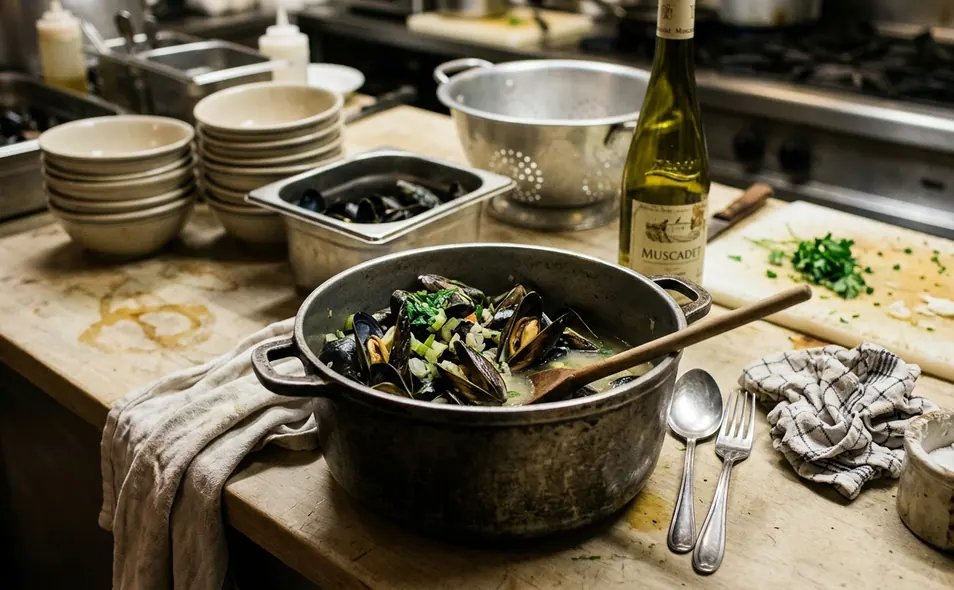
Sourcing and Preparing Fresh Mussels
Start with signs of life, not shell size. Good mussels look damp and cold, close when tapped, and smell cleanly briny. A large shell with a sour or ammonia-like smell is not a bargain; it is a warning.
Buy mussels the same day you cook them when possible. If you must hold them, keep them in the coldest part of the refrigerator for no more than 18 to 24 hours in a ventilated bowl covered with a damp towel. Do not seal live mussels in water or an airtight bag. They need airflow and drainage while chilled.
For a food-safety baseline before buying, the FDA guidelines on selecting fresh seafood are a useful reference.
Sorting and cleaning
- Discard mussels with cracked shells before cooking.
- Tap open raw shells firmly; keep only those that close.
- Rinse under cold running water.
- Scrub only shells with visible mud, barnacle grit, or rough debris.
- Remove beards just before cooking, not hours ahead.
Farmed rope-grown mussels are often cleaner and may need only rinsing and debearding. Wild or bottom-cultured mussels can need the full cold soak and more shell scrubbing. Treat the mussels in front of you, not the romantic idea of them.
Debearding and soaking
The beard is the fibrous byssal thread that can cling to the side of the shell. Pull it toward the hinge end with a firm motion. Pulling outward can tear the mussel; pulling toward the hinge is cleaner.
For grit removal, soak the mussels in very cold salted water for 10 to 15 minutes. Use roughly 30 to 35 g sea salt per litre of cold water. Lift the mussels out by hand afterward instead of pouring the sandy water back over them.
Tip: Keep cleaning brief and purposeful. Mussels are alive, and long soaking does not improve the broth; it only gives you more chances to mishandle them.
The Anatomy of a Perfect Marinières Broth
The broth should taste like the sea sharpened by wine, not like a sauce trying to hide the mussels. For about 1.8 to 2 kg mussels, use 200 to 250 ml dry white wine. The liquid should cover only the base of the pot before the mussels release their own juices.
Muscadet, Chablis, or a crisp Sauvignon Blanc all work because they are dry, high-acid, and clean after boiling. Avoid sweet wine and heavily oaked bottles. Boiled oak has a blunt, woody character that sits badly with shellfish.
Butter, shallots, garlic, and parsley
Use 35 to 45 g butter to sweat the aromatics. European-style butter brings roundness and helps the broth feel lightly emulsified rather than thin. If you want a glossier finish, whisk in another 10 to 15 g butter after cooking, once the mussels are out or the heat is off.
The aromatic ratio matters. For this batch, use 2 medium shallots, about 70 to 90 g trimmed weight, with 2 or 3 garlic cloves, about 6 to 12 g. Shallots lead with sweetness; garlic provides the edge. When garlic dominates, the broth tastes hot and narrow.
Add 12 to 18 g chopped flat-leaf parsley after the heat is off. Parsley cooked too long turns dull and grassy; added late, it keeps the pot fresh.
Watch for: Adding garlic before the shallots have softened can scorch it in butter, giving the broth a bitter edge that the wine will not fully hide.
Step-by-Step Cooking Instructions
This is an in-the-moment dish. Have the mussels cleaned, parsley chopped, wine measured, and serving bowls ready before you turn on the heat.
Method
- Melt the butter. Place a heavy 5 to 6 litre pot over medium heat. Add 35 to 45 g butter and melt for 45 to 60 seconds, just until foaming but not browning.
- Sweat the shallots. Add the chopped shallots and cook for 2 to 3 minutes, stirring often, until translucent.
- Add the garlic late. Stir in the garlic for the final 30 to 45 seconds. It should smell fragrant, not toasted.
- Deglaze with wine. Add 200 to 250 ml dry white wine and bring it to a vigorous boil for 60 to 90 seconds.
- Add the mussels. Tip in the cleaned mussels and cover immediately with a tight-fitting lid.
- Steam hard. Cook over high heat for 2 minutes before the first shake.
- Shake the pot. Holding the lid firmly, shake the covered pot for 5 to 8 seconds to move the lower mussels upward.
- Finish steaming. Continue cooking another 2 to 4 minutes, until most shells have opened.
- Finish with parsley. Remove from the heat, scatter in the parsley, and toss once more.
The cleanest result comes when the wine reaches a hard boil before the mussels go in. That short boil drives off raw alcohol sharpness and gives the steam immediate force.
Moules Marinières Readiness Checklist
- Mussels smell clean and briny, not sour or ammonia-like.
- Open raw shells close after a firm tap; cracked or dry shells are removed.
- Beards are pulled just before cooking.
- The pot holds the mussels in a movable layer, not a packed column.
- Wine is measured before cooking starts.
- Serving bowls, shell bowl, frites, bread, or mayonnaise are ready before the lid comes off.
Troubleshooting and Recipe Limitations
Most problems in moules marinières come from heat flow. A narrow 3 litre saucepan packed with 2 kg mussels traps the bottom layer against direct heat while the top layer steams slowly. The result is predictable: shriveled meat below, unopened shells above.
If using more than 2 kg mussels, split them into two batches unless the pot is at least 7 to 8 litres with a broad base. A wider pot is not a luxury here; it is part of the recipe.
Rubbery mussels
Rubbery texture usually appears after the shells have been open for several extra minutes. Remove the pot from the heat as soon as the majority are open and steaming hot. Do not wait for every single shell to cooperate.
Discard any mussels that remain tightly closed after the covered steaming step. Also discard cracked shells before cooking. These habits are plain brasserie discipline, not fussiness.
Weak or watery broth
Do not simmer the mussels uncovered to reduce the sauce. That punishes the meat. If you want a stronger sauce, lift the mussels into warm bowls, then reduce the broth separately for a short moment before spooning it back over them.
Important: This dish is built for immediate service; it is a poor make-ahead recipe because reheating cooked mussels dries the meat and dulls the wine-garlic broth.
Serve within 5 to 8 minutes of finishing. Within the limits of a dish that wants the table more than the holding cabinet, that short window is where moules marinières tastes most alive.
Serving the Belgian Way
Serve 450 to 500 g mussels per person as a main course when paired with frites. The mussels arrive in their broth; the frites stay separate so they remain crisp. That separation matters.
Frites, mayonnaise, and bread
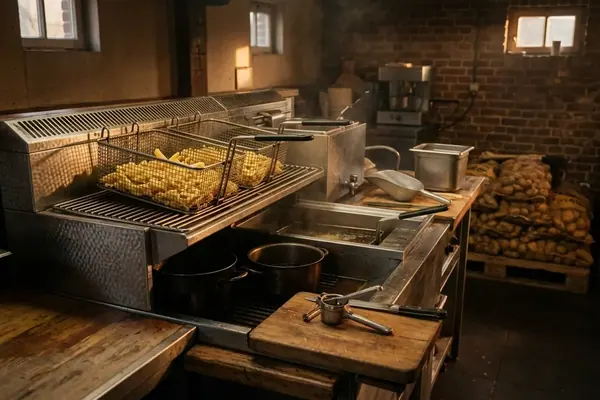
For Belgian-style frites, cut potatoes 10 to 12 mm thick. Cook them once at 140 to 150°C until tender, let them rest, then fry again at 175 to 180°C until crisp. Serve with homemade mayonnaise if you can; the contrast of hot potato, cool mayonnaise, and briny broth is the rhythm of the meal.
If frites are not the main starch, provide 2 to 3 thick baguette slices per person. The bread is not decorative. It is for the garlic and wine broth left at the bottom of the bowl.
At the table
Place an empty bowl on the table for shells. A 2 kg mussel batch produces a large volume of shells and needs more than a side plate.
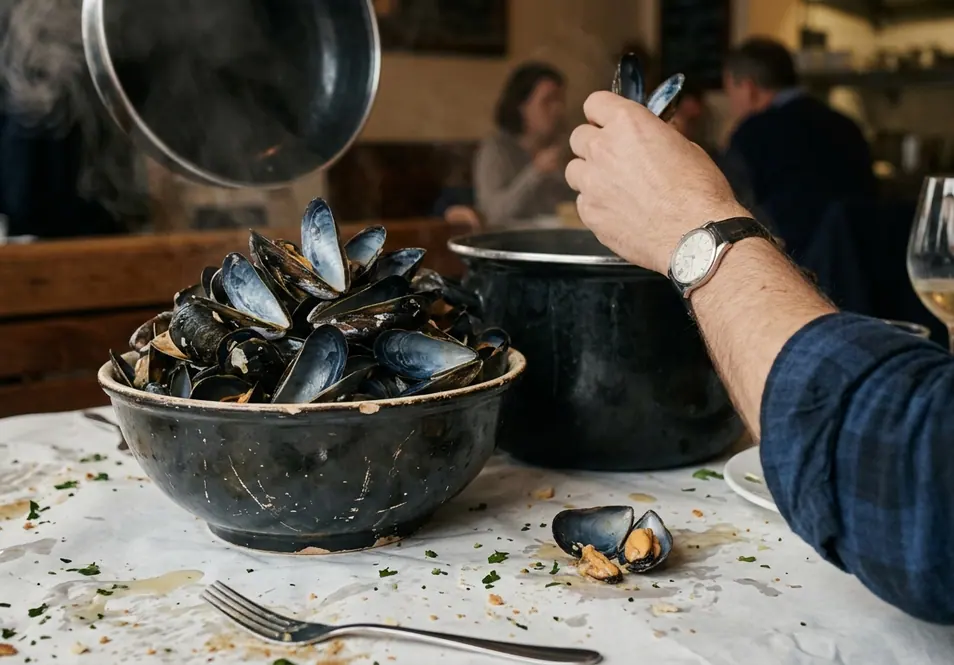
To eat Belgian-style, use the first empty shell like tweezers to pinch meat from the remaining shells. It is efficient, tidy, and pleasantly old-fashioned.
Tip: Bring the pot to the table only when everyone is seated. Moules marinières does not improve while waiting for someone to find a fork.





Comments
Start the discussion.
Join the Discussion