
In this Article
- The Belgian Tradition of Beer and Seafood
- Criteria for Perfect Pairings: The Science of Flavor
- 5 Classic Belgian Beer and Seafood Pairings
- Scope and Limitations: When Pairings Clash
- Crafting Your Own Tasting Experience
The Belgian Tradition of Beer and Seafood
Beer belongs on the Belgian seafood table because these dishes are brasserie food, not fragile tasting-menu ornaments.
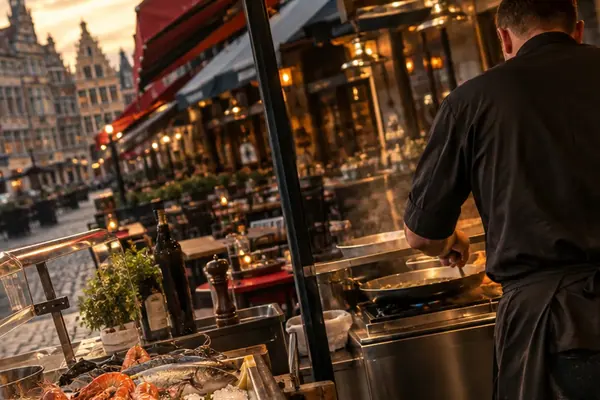
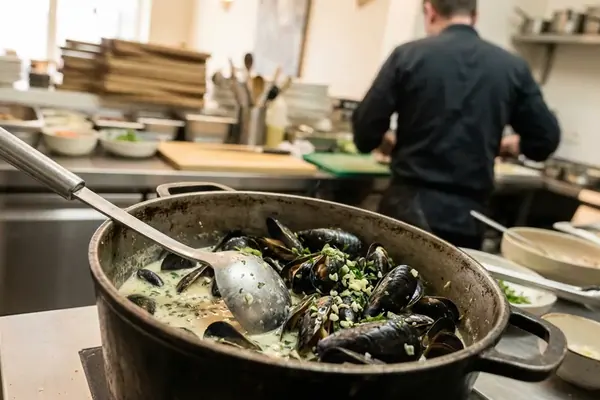
A Brussels-style moules-frites order often arrives as a full casserole for one diner, commonly around 1 kg or a little more of mussels before the shell weight is removed. That is a generous, steamy, hands-on meal. Wine can work, of course, but Belgian beer has the better local accent: bubbles for butter, yeast spice for shellfish sweetness, and enough range to move from raw oysters to cream-bound waterzooi without leaving the country.
Quick start: For a fast starting point, serve witbier at 4-6°C with moules marinières, oude geuze at 6-8°C with oysters, and Belgian blonde at 5-7°C with shrimp croquettes. Those three pairings cover the main brasserie textures: broth-steamed, raw-briny, and fried-creamy.
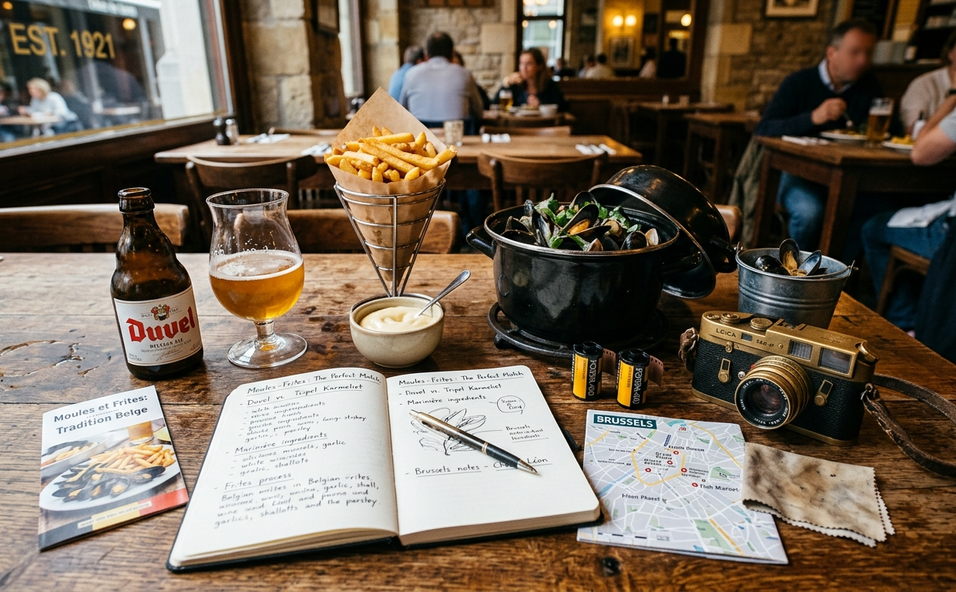
The coastal-inland connection is practical rather than romantic. Mussels and grey shrimp come from the North Sea. Brussels sat between that coastal trade and inland brewing culture, with seafood moving into the city through same-day or next-day market routes. The plate and the glass met because service demanded it.
Belgian beer culture is also recognized by UNESCO as an Intangible Cultural Heritage, but I would not use that as a shortcut for pairing. Heritage gives the meal its frame; the bite still decides the beer.
Criteria for Perfect Pairings: The Science of Flavor
In repeated tastings, I judge a seafood pairing by what happens after the first mouthful, when butter, salt, smoke, cream, or shellfish liquor starts to build on the palate.
Carbonation cleans the working edge of the palate
Bottle-conditioned Belgian ales often pour with lively carbonation. In food service terms, a pour in the ballpark of 2.5-3.5 volumes of CO2 gives enough lift to cut butter sauces, fried coatings, and the gelatinous richness of shellfish broth. This is why a bright witbier can make a pot of moules marinières feel fresh through the final shells instead of heavy after the first dozen.
Carbonation is not decoration. It is the rinse between bites.
Yeast esters echo shellfish sweetness
Witbier and saison work with seafood because their aromatics stay close to the ingredients already on the plate. Citrus peel, coriander, peppery yeast, and gentle fruit notes meet the natural sweetness of mussels, scallops, and shrimp without dragging the dish into dessert territory.
For delicate shellfish, I keep bitterness low to moderate. Beers around 10-30 IBU give enough structure while avoiding the hard edge that makes brine taste severe.
Acidity can replace lemon or vinegar
Traditional lambic-based sour beers often finish in a lemon-like acidity range, commonly in the low-to-mid 3s for pH. That explains why oude geuze behaves so cleanly beside oysters. It brings the snap of mignonette without covering the oyster with shallot, vinegar, or citrus pulp.
Pairing rule: Before choosing a beer, name the job: lift fat, echo sweetness, add acidity, or soften salt. One clear job usually beats a clever label.
5 Classic Belgian Beer and Seafood Pairings
These pairings move from the most approachable brasserie match to the richest table finish. Each one depends on one trait doing the main work.
1. Witbier and Moules Marinières
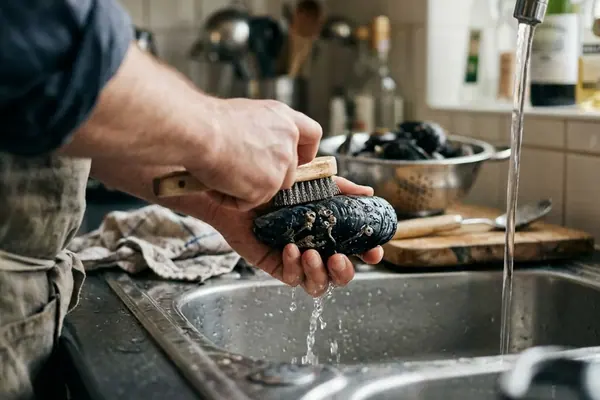
Witbier is the house answer for moules marinières because the beer mirrors the pot. Orange peel and coriander sit comfortably beside celery, onion, parsley, white wine, and the mineral sweetness of mussels. The match is best when the mussels are steamed only until opened, usually 5-7 minutes in a covered pot over high heat.
Overcooked mussels lose the clean sweetness that makes the beer shine. Keep the broth fragrant, not muddy.
2. Saison and Grilled Scallops
A scallop asks for contrast at the edges: sweet center, caramelized crust, clean finish. A saison at roughly 6-8% ABV has the dryness and peppery shape to sharpen that crust without crowding the shellfish.
Cook large sea scallops hot and fast, typically 60-90 seconds per side. Then pour the saison before the scallops cool. The beer’s dry finish turns the browned surface from merely sweet to savory.
3. Oude Geuze and Fresh Oysters
Oude geuze with oysters is not a polite pairing; it is precise. The beer is bone-dry, tart, and quick across the palate, so it acts like a restrained mignonette. Raw oysters should be served cold, held at 0-4°C before shucking, while the beer performs better slightly warmer than fridge-cold, around 6-8°C.
The result is bright, briny, and direct. No garnish needs to compete.
4. Belgian Blonde and Shrimp Croquettes
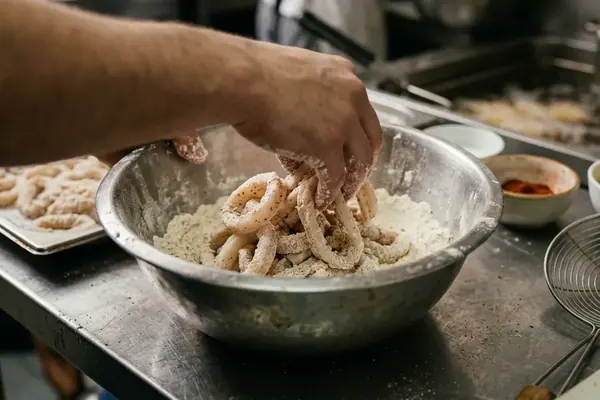
Shrimp croquettes need roundness. A Belgian blonde at roughly 6-8% ABV brings enough malt sweetness to meet the molten béchamel while staying lighter than a dark ale. Croquettes are usually fried at 170-180°C until the crust sets crisp and the interior stays soft.
The same geuze that makes raw oysters taste brighter can feel too sharp with a creamy shrimp croquette, where the frying fat and béchamel usually need malt roundness rather than extra acidity.
5. Tripel and Seafood Waterzooi
Tripel belongs late in the meal. Many tripels sit around 8-10% ABV, so the beer has enough weight for a cream-based seafood waterzooi, but it can outrun lighter fish if poured too early.
Keep the stew gentle after the cream goes in. Simmer, do not boil. Boiling dulls the fish and risks splitting the sauce, which leaves the beer tasting louder than the dish.
Scope and Limitations: When Pairings Clash
Not every Belgian beer is a friend to seafood. Some of the country’s grandest bottles are better held for cheese, game, or a quiet glass after dinner.
Dark beers can flatten delicate fish
Dark, malt-heavy Belgian styles such as dubbels and quadrupels commonly bring raisin, caramel, toast, and dark sugar notes. Against cod, sole, plaice, or turbot served with only lemon and butter, those flavors read too sweet or too roasted. A delicate sole meunière can taste flat beside a strong tripel even though both are Belgian-table friendly; the beer's alcohol and fruitiness can outpace the fish before the butter sauce has a chance to register.
High bitterness sharpens brine
Highly hopped beers above roughly 40-45 IBU are risky with oysters, mussels, clams, and sea urchin. Salinity and iodine make bitterness feel sharper and more metallic. The issue is not that hops are forbidden; it is that briny seafood magnifies their harder edge.
Caution: Treat very bitter beers cautiously with raw or simply steamed shellfish. If the first sip tastes metallic after the bite, the pairing will not improve over the plate.
Temperature changes the pairing
Serving complex Belgian ales below roughly 3°C mutes peppery phenols, citrus esters, and acidity. Most seafood pairings show better aroma when pale styles sit around 4-7°C, with stronger tripels closer to 7-10°C. Brussels brasseries may pour beers colder for fast service than a tasting-focused home meal would; letting the glass warm slightly can change the pairing more than switching to another pale Belgian style.
There is one useful exception to the caution: smoked fish, brown shrimp with strong seasoning, or seafood cooked in tomato and paprika can tolerate darker or more bitter beers than raw oysters or simply steamed white fish.
Crafting Your Own Tasting Experience
Build the tasting from the seafood outward. Start with weight: raw oyster, steamed mussel, seared scallop, fried croquette, creamy stew. Then choose whether the dish needs lift, acidity, spice, or sweetness.
A practical serving order
- Oysters with oude geuze.
- Moules marinières with witbier.
- Grilled or pan-seared scallops with saison.
- Shrimp croquettes with Belgian blonde.
- Seafood waterzooi with tripel.
Pour a small tasting measure, 120-150 ml of each beer per pairing. That gives guests enough to compare styles without turning the meal into a full-strength beer flight.
Let the beer wake up
For chilled bottle-conditioned beers, allow a short wait, 8-12 minutes, for the glass to rise from refrigerator temperature into a more expressive seafood-pairing range, especially with saisons, blondes, and tripels. The change is small on a thermometer and large in the nose.
Trust your palate, but give it fair conditions. A beer tasted too cold beside seafood is like a mussel pot served without its broth: technically present, missing its voice.
Belgian beer and seafood pairing is not about collecting rare bottles. It is about taking time with ordinary excellence: a hot casserole of mussels, a crisp croquette, a cold oyster, a glass that meets the food rather than competing with it.

Comments
Start the discussion.
Join the Discussion