
The High Cost of a Bad Brussels Seafood Choice
Skip the seafood restaurants on Rue des Bouchers and begin your search in Sainte-Catherine or a neighborhood brasserie in Ixelles. That is the most useful verdict for a visitor with one evening, one dining budget, and an appetite for proper moules-frites.
A standard restaurant portion commonly contains roughly 1 kilogram of shell-on mussels. When that pot arrives overcooked, the loss extends beyond the price printed beside the dish. The diner has spent the main-course budget and the evening meal slot on contracted meat, tired broth, and frites that cannot rescue either.
I judge the risk before taking a seat. Four details carry more weight than a crowded terrace: the posted price, solicitation by staff, information about mussel origin or cultivation method, and evidence that the dining room serves repeat customers. Rue des Bouchers performs poorly as a default choice under that screening method. The rule concerns dining risk; it does not claim that every kitchen on the street mishandles seafood.
Choose the District First
Sainte-Catherine sits roughly a 10- to 15-minute walk from Grand Place. That short walk reaches the part of central Brussels most closely associated with the historic fish trade. Ixelles asks for a larger commitment, often around 20 to 35 minutes on foot or by public transport depending on the starting point, but its neighborhood brasseries have less reason to build the entire experience around passing tourists.
- For a central seafood dinner: search around Sainte-Catherine and the Vismet area.
- For a neighborhood brasserie: compare concise menus in Ixelles.
- Before sitting down: confirm the portion, accompaniments, origin, and total posted price.
Leave the Lanes
Treat the first five walking minutes around Grand Place as a no-booking zone. Spend the next 10 to 15 minutes reaching Sainte-Catherine, where origin detail deserves more attention than neon frontage.
Why Rue des Bouchers Ice Displays Signal Risk
The elaborate pavement ice bed is merchandising. It may keep whole fish visually attractive, yet it reveals nothing about landing date, cold-chain history, or whether the displayed seafood will appear in the dish ordered inside.
That distinction matters because the display answers the wrong question. A diner needs to know what the kitchen has available, where the mussels came from, and when the pot will be cooked. Crushed ice, silver platters, lemons, and oversized shellfish arrangements offer no answer. A short written seafood list and a server who can identify the current stock provide stronger evidence.
Listen to the Sales Method
Menu-waving and multilingual pavement solicitation create pressure before the customer has checked prices or preparation. Walk past when staff interrupt the comparison process. At the table, inspect the named portion and its accompaniments before ordering. Bread, bottled water, sauces, or an aperitif may carry separate prices; service and VAT should not return later as compulsory additions.
Fast service also requires interpretation. Ask whether every mussel pot is started after the order. Once a covered pan reaches vigorous steam, a fresh batch generally needs roughly 6 to 10 minutes. A pot arriving in under 3 minutes, when there is no visible batch service, deserves scrutiny.
Read the Pot on Arrival
Held mussels announce themselves through several small defects. Shells around the rim may look dry. The meat can be heavily contracted. The casserole may feel hot while releasing little aromatic steam when opened. These signs point toward seafood that has spent time waiting after cooking.
Steam Before Spectacle
Use the ice-bed-to-black-enamel-pot test: disregard the pavement display, verify origin and cooking time, then inspect whether broth and steam survive service in the cooking vessel.
High turnover alone does not prove poor cooking. Some kitchens organize genuine batch service during a rush. The server should be able to explain that system plainly rather than evading a simple question about when the mussels entered the pan.
What a Serious Brussels Mussel Brasserie Reveals
Information quality comes first. Laminated pages packed with photographs tend to make every dish look permanently available. A credible Belgian seafood brasserie usually offers a tighter selection, names the mussels’ origin, limits the number of preparations, and changes its offer as supply changes.
Origin Should Be Specific
“Zeeland” alone leaves an important question unanswered. A well-informed server should distinguish bottom-cultured mussels from suspended-culture mussels and state the current origin. Those details affect growth conditions and help confirm that someone in the restaurant understands the product beyond the menu description.
Seasonality deserves the same precision. The old custom of choosing months containing the letter “r” remains useful cultural shorthand, though it is not a complete modern harvest calendar. The principal Zeeland season generally opens between late June and July, depending on meat content and annual growing conditions, and may continue into April. Exact opening dates shift with the harvest.
A restaurant that removes mussels when its preferred supply is unavailable shows more discipline than one promising the same origin every week of the year. Ask what is being served that day. The answer should be direct.
The Casserole Is Part of the Method
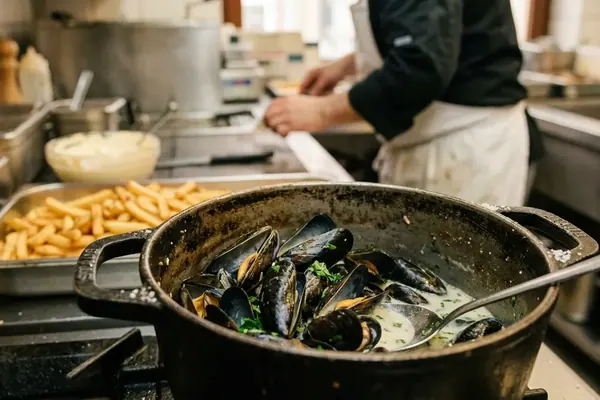
For an individual serving of roughly 1 kilogram shell-on, traditional service keeps the mussels in the same covered black enamel casserole used for steaming. The vessel retains heat and protects the broth beneath the shells. Its inverted lid becomes the bowl for empty shells.
Transferring mussels to a broad plate sacrifices heat quickly and separates the diner from the cooking liquor, which carries the white wine, vegetables, herbs, and shellfish juices. The casserole also exposes kitchen timing. Lift the lid and look for a release of aromatic steam, moist shells, and broth still pooled at the bottom.
- Confirm the current origin and cultivation method.
- Ask whether the pot begins cooking after the order.
- Expect a covered enamel casserole with its lid available for shells.
- Check for steam, supple meat, and broth beneath the finished mussels.
Décor can support the pleasure of Brussels dining, but operational details decide the quality of the pot.
Sainte-Catherine Keeps Brussels Seafood History in View
Sainte-Catherine earned its seafood identity through geography and trade. The district developed around Brussels’ former inner port and the fish-market area called the Vismet. From the 1870s into the early 20th century, the inner-city docks were filled and the old quays changed function. Fish trading and restaurants kept the district’s culinary association alive, while the organized fish market remained there until the mid-1950s.
That history is visible in the concentration of seafood dining around the former quays. It also provides a useful setting for comparison: several menus can be examined within a compact area, making vague origin claims and inflated prices easier to spot.
Ask What Arrived That Morning
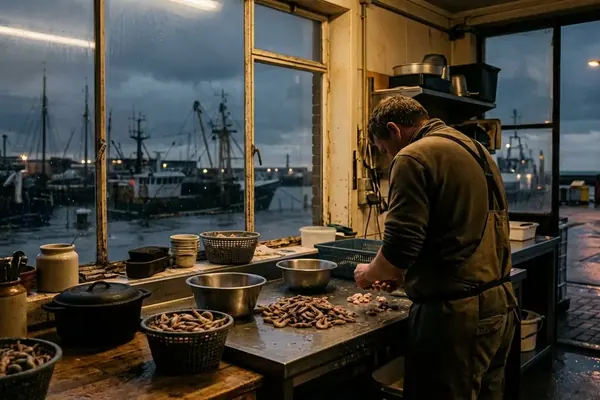
Present-day quality still has to be verified restaurant by restaurant. Historical continuity does not mean every chef buys directly from a boat. Strong kitchens can explain what arrived that morning, who supplied it, and how each market dish is priced.
Fresh North Sea sole is commonly sold whole and cooked to order. Before agreeing to the dish, establish whether the listed price covers a whole fish, a fixed fillet, or a weight-based portion. This avoids confusion when the bill arrives and gives the server an opportunity to demonstrate command of the daily offering.
Belgian grey shrimp require another precise question. Their small size makes peeling labor-intensive, so the menu should distinguish hand-peeled local shrimp from cheaper substitutes. A generic shrimp description carries little sourcing value.
Local Demand Changes the Room
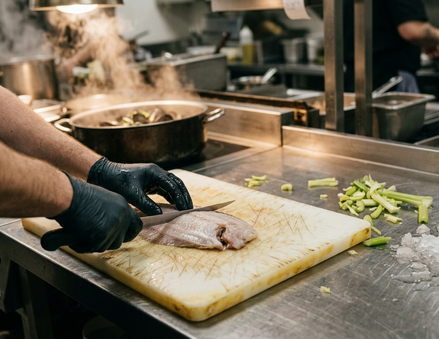
A dining room serving repeat customers faces a different test from one relying mainly on transient foot traffic. Locals can compare today’s sole with last month’s, notice a thinner mussel broth, and return only when the kitchen remains consistent. Look for understated rooms, concise specials, and tables occupied without pavement persuasion.
This is where culinary travel becomes practical rather than ceremonial: the neighborhood’s heritage helps narrow the search, while current origin and preparation details decide the meal.
Book Beyond the Grand Place Seafood Boundary
Use the five-minute radius around Grand Place as a deliberate seafood avoidance rule. It is a planning boundary rather than a scientific measure of kitchen quality, and it prevents convenience from making the decision.
Start with Sainte-Catherine. Compare two or three menus for mussel origin, seasonal availability, portion description, and transparent pricing. Then reserve only after the restaurant confirms that mussels are currently available and cooked by the pot.
Time the Reservation
For Friday or Saturday dinner, contact the restaurant 2 to 5 days ahead. A weekday table benefits from a 24- to 48-hour buffer, especially in a small historic dining room. Request a seating time between 19:00 and 20:30 when the goal is full dinner service.
Supply can change after a menu is published, so use the booking conversation to verify the current mussel origin and preparation. A useful request is concise: ask which mussels are being served, whether each casserole is steamed to order, and whether the quoted price includes frites.
- Reject seafood options within the first five minutes’ walk from Grand Place.
- Walk 10 to 15 minutes toward the core Sainte-Catherine dining area.
- Compare several menus before selecting a dining room.
- Reserve in advance and reconfirm the live mussel offering.
- Order only after the restaurant states the origin, portion, and preparation clearly.
When that black enamel pot finally arrives at a quiet Sainte-Catherine table, lift the lid. If the steam carries the sharp scent of white wine and celery, and the shells sit pooled in their own rich broth, that short walk from the center has already paid off.



Comments
Start the discussion.
Join the Discussion