
Key Takeaways for Flawless Fried Calamari
Home cooks usually lose the battle for perfect fried calamari at one of a few stages: surface moisture, meat tenderness, crust structure, or oil temperature control. Squid cooks incredibly fast. You have a narrow window to develop a golden crust before the protein seizes and turns rubbery.
To hit that window, preparation matters more than the time spent at the stove. A practical home batch is in the ballpark of 1 pound of cleaned squid. This volume fits neatly into three to four frying rounds in a Dutch oven hovering around 4 quarts.
Critical Insight: Pat the squid dry until no visible moisture transfers to a fresh towel. Wet rings create steam pockets that immediately shed their dredge in the hot oil.
Home Frying Control Checklist
In repeated tastings, the most reliable setup looks like this:
- Squid thawed, cleaned, sliced into about 1/2-inch rings, and blotted dry.
- Dairy soak completed for 30 minutes to 2 hours, then drained and dried again.
- Dredge mixed at 3/4 cup flour to 1/2 cup cornstarch with salt and spices.
- Oil held at 350°F, recovering to at least 340°F between batches.
Selecting and Prepping Your Seafood
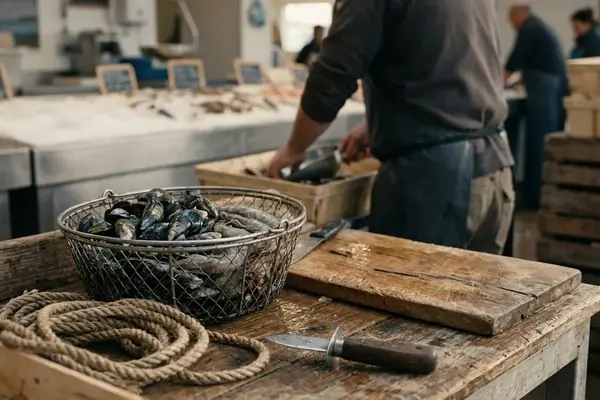
During recipe development work, I spend time evaluating seafood counters. You want squid with a clean marine smell, glossy flesh, and tubes that feel slick rather than tacky. Reject any batch carrying an ammonia-like odor.
In my review of market options, frozen cleaned squid often outperforms fresh display-case squid when the latter has an uncertain turnover rate. If you choose frozen, thaw it in the refrigerator for 8 to 12 hours on a rimmed tray, then drain the excess liquid before cleaning. Always follow safe seafood preparation guidelines when handling raw catch.
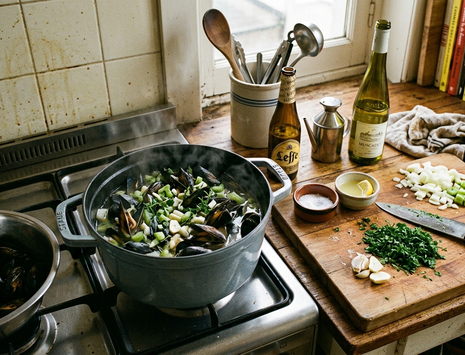
Cleaning whole squid requires a firm hand. Pull the head and innards directly from the tube. Locate and remove the clear cartilage quill inside the body. You can peel away the loose purple membrane if you prefer a stark white ring, though leaving it on does no harm. Cut the tentacles just below the eyes and press out the hard beak hidden in the center of the tentacle cluster.
Slice the tubes into uniform, about 1/2-inch rings. This thickness helps the rings cook in the same 2 to 3 minute window as the tentacles.
The Secret to Tender Calamari: The Dairy Soak
Calamari is lean and delicate. We use a dairy soak for mild tenderizing and surface mellowing, not heavy marination. Milk or buttermilk coats the squid evenly and leaves behind a slight residue that helps the dry dredge adhere later.
Use roughly 1 to 1 1/2 cups of dairy for 1 pound of cleaned calamari in a shallow bowl. The liquid should barely cover the seafood. Keep the bowl refrigerated during this process, especially if your kitchen is warmer than hovering around 70°F.
Timing depends entirely on the size of your catch. Soak for 30 minutes for small, tender rings. Average market squid needs 60 to 90 minutes. Thicker tubes can handle up to 2 hours.
Recommendation: After soaking, drain the calamari in a colander for 5 minutes, then blot thoroughly with towels. Visible milk pooling in your dredging bowl will cause the coating to clump into heavy, unappetizing patches.
Crafting the Ultimate Crispy Coating
The coating uses flour for browning and cornstarch for crispness—a necessary balance because squid needs a crust that sets before the meat overcooks. We build the flavor directly into the dry mix.
For 1 pound of cleaned squid, whisk together 3/4 cup all-purpose flour and 1/2 cup cornstarch. Season this base with 1 teaspoon of fine sea salt, 1/2 teaspoon of smoked paprika, 1/2 teaspoon of garlic powder, and 1/4 teaspoon of black pepper.
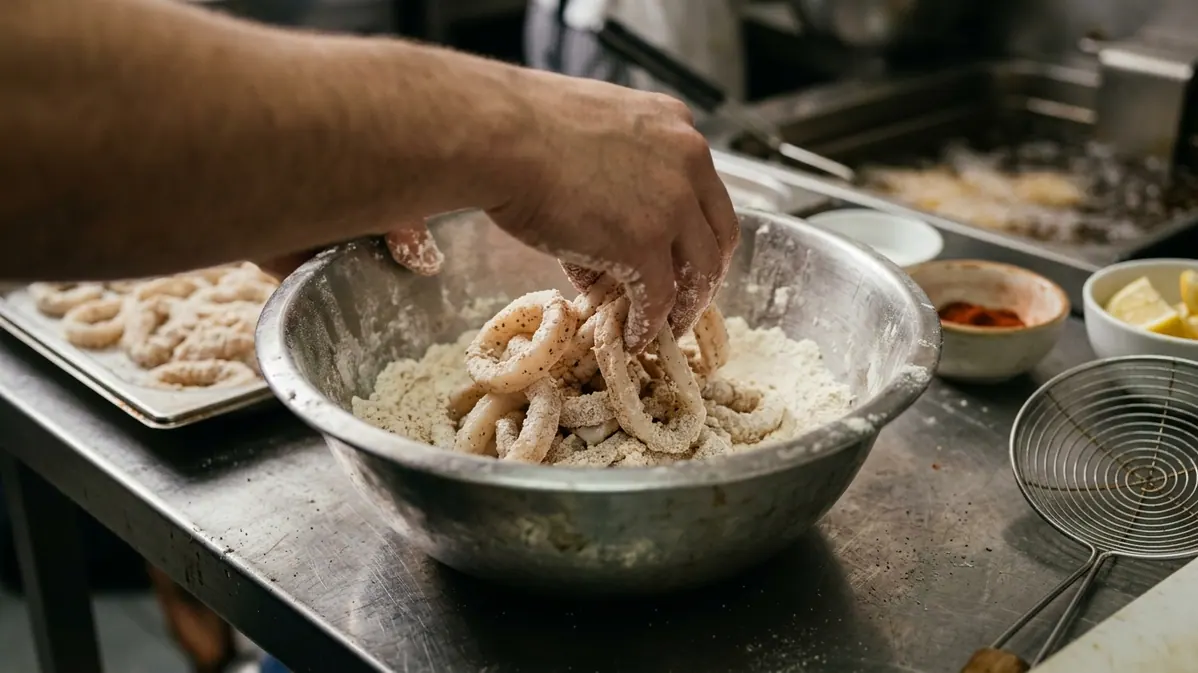
Calamari dredged while visibly wet often sheds its coating within the first minute of frying, leaving bare rings and gritty flour sediment burning at the bottom of your pot. Work in small batches. Dredge no more than one loose handful of rings and tentacles at a time. Lift the pieces and shake them for 2 to 3 seconds over the bowl. The final coating must be thin enough to show the ring shape clearly.
Frying Mechanics and Temperature Control
Successful frying centers entirely on thermal recovery. Adding a full pound of squid to a home pot at once pulls the oil far below the target temperature, producing a pale, greasy crust long before the squid finishes curling.
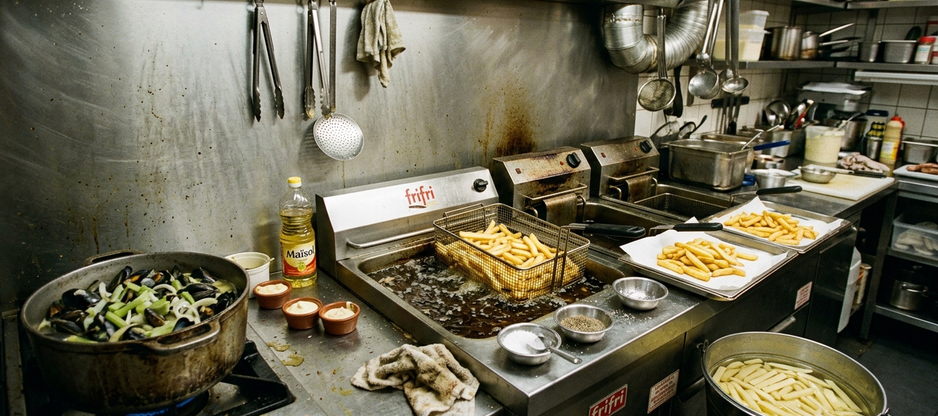
Pour 2 to 3 inches of a neutral, high-smoke-point oil into a heavy pot. Leave at least 3 inches of headspace above the oil line to account for bubbling. Preheat the oil to 350°F and monitor it constantly with a clip-on deep-fry thermometer. Wait until the thermometer holds steady for 2 minutes before dropping your first piece.
Fry in batches of roughly 3 to 4 ounces. Cook for 2 to 3 minutes. Remove the calamari the moment the coating turns pale golden to golden brown and the rings have curled but not shriveled.
Risk Factor: There is one catch to this method: very large squid tubes cut thicker than 1/2 inch may need a different preparation, such as scoring or brief grilling, because extended frying toughens them before the crust improves.
Serving Suggestions and Belgian-Inspired Pairings
How you handle the calamari after it leaves the oil dictates its final texture. Paper towels trap steam against the hot crust, turning it soggy within minutes.
Transfer the fried batches directly to a wire rack set over a sheet pan. Salt the rings within about 30 seconds of them leaving the oil so the crystals melt into the residual fat. If you are frying multiple rounds, hold the finished batches in a 200°F oven for no longer than 10 to 12 minutes.
Serve immediately with fresh lemon wedges and a dipping sauce. Garlic aioli or a sharp tartar sauce work beautifully; plan for 2 to 3 tablespoons of sauce per person. To complete the experience, pair the crispy seafood with a chilled Belgian-style Witbier served around 40°F to 45°F, or pour a dry coastal white wine kept between 45°F and 50°F.






Comments
Start the discussion.
Join the Discussion