
The Structural Evolution of the Cream-Enriched Broth
Moules à la crème exists as a deliberate structural modification of the classic moules marinière. In the coastal kitchens of Belgium and Northern France, cooks faced a recurring environmental challenge. The sharp, aggressive acidity of local white wines often overpowered the delicate, briny liquor released by steamed bivalves. The standard shallot and wine broth required a counterbalance to soften the acidic bite during the harsh coastal winters. Cooks enriched the base liquid with heavy dairy, fundamentally altering the fluid dynamics of the dish.
The fat content in the cream binds with the acidic wine reduction. This creates a velvety suspension that encapsulates the volatile aroma compounds of the alliums and the sea, carrying them across the palate at a slower, more sustained rate. A stable emulsion depends on three factors. Use cream containing at least 30% milk fat to prevent the proteins from denaturing. Remove the mussels from the pot before reducing the sauce to avoid overcooking the meat. Finish the broth with fresh herbs completely off the heat to preserve their vibrant color and essential oils.
The active cooking window is remarkably brief. Expect 3 to 4 minutes of steaming in a tightly covered, wide pot, followed by roughly 4 to 6 minutes for reducing and finishing the sauce. Mastering this preparation demands strict temperature control and precise timing.
Selecting Bivalves and Building the Acidic Backbone
Selecting the right bivalve dictates the volume and salinity of your base liquid. Bottom-cultured Zeeland mussels grow directly on the sea floor. They commonly feature broad, thick shells and hold ample liquor inside, which contributes significantly to the final volume of the broth. Rope-grown Bouchot mussels are cultivated on wooden poles in the intertidal zone. They are exposed to the air twice a day, resulting in a tighter shell seal, a smaller profile, and a denser, slightly sweeter meat-to-shell ratio.
For four main-course servings, purchase 1.5 to 2 kg of live mussels. Shell weight is substantial. This quantity usually fills a 6 to 8 liter pot without crowding it beyond safe tossing capacity. Fresh mussels should smell strictly of cold seawater, hold tightly closed shells, and remain chilled at 1 to 4°C until the exact moment of cleaning.
The culinary science of introducing dairy into an acidic environment dictates your shopping list. Heavy cream, specifically crème entière or whipping cream in the 30 to 35% milk fat range, is mandatory. The high fat content stabilizes the emulsion by coating the casein proteins, preventing them from clumping together when they meet the acid. Milk or half-and-half lacks this protective fat structure and will immediately split when introduced to a boiling white wine reduction. While this method guarantees a stable emulsion, it assumes the use of raw, live cultivated mussels; previously cooked or frozen mussels require a completely different thermal approach.
For the acidic backbone, pour 200 to 250 ml of a dry, crisp white wine. Muscadet or an unoaked Sauvignon Blanc provides the necessary sharpness to cut through the rich dairy. Avoid wines labeled medium-dry and bottles with obvious residual sweetness. Sugar disrupts the savory, briny balance of the final broth.
Purging, Debearding, and Shell Inspection
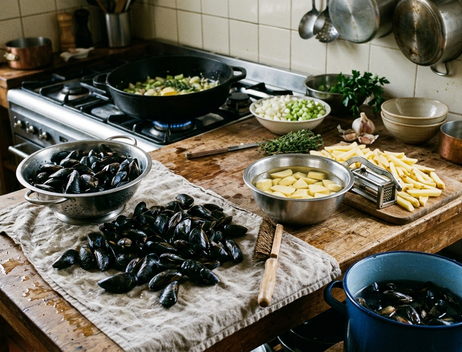
Cleaning happens immediately before cooking. The byssal threads, commonly known as the "beard," are secreted by a gland in the mussel's foot to anchor it to rocks or ropes. Removing these threads tears the internal tissue and drastically shortens the period the bivalve remains alive. Plan 10 to 15 minutes to clean and debeard 1.5 kg of cultivated mussels.
Tip the bivalves into a large colander and rinse them thoroughly under cold running water. Scrub the shells vigorously with a stiff brush to ensure no sand, mud, or grit transfers into the pot. Even a small amount of sediment will ruin the velvety texture of the final cream sauce, rendering the broth gritty and unpleasant.
Follow strict guidelines for selecting and serving fresh seafood during this inspection phase. Tap any open shell firmly against the counter and wait 20 to 30 seconds. Discard the mussel if it neither closes nor shows clear movement. Discard shells with exposed flesh, major cracks, or broken hinges.
Pre-Cook Inspection Criteria
- Mussels smell marine, have intact shells, and react when tapped.
- Cream contains at least 30% milk fat.
- Pot is wide enough to hold the mussels below the rim with room to shake.
- Warm serving bowl is ready before steaming begins.
- Opened mussels are removed promptly to prevent rubbery textures.
Thermal Control During Steaming and Reduction
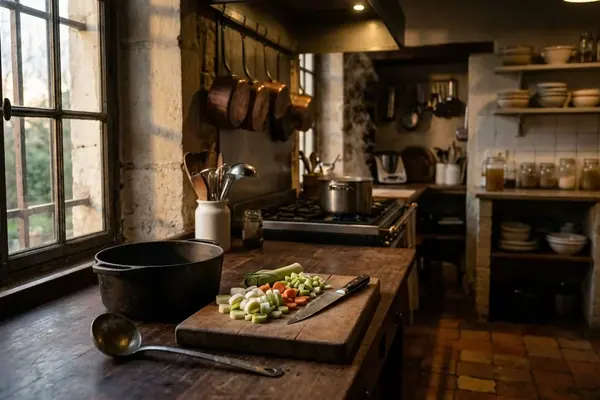
Equipment selection directly impacts the cooking timeline and the texture of the meat. Use a wide pot. Rapid steam circulation opens the mussels more evenly than a deep, tightly packed vessel. A narrow pot causes the mussels at the bottom to boil aggressively in their own liquor while the ones at the top remain raw. A 26 to 30 cm diameter pot provides the necessary surface area for uniform heat distribution.
Begin by sweating two finely chopped shallots and one small celery stalk in 25 to 30 g of unsalted butter. Keep the heat medium-low for 3 to 4 minutes. The alliums must turn translucent without browning. Browned shallots introduce bitter, caramelized notes that clash with the sweet cream and delicate seafood.
Increase the heat to high, pour in the 200 to 250 ml of wine, and immediately add the mussels. Cover the pot tightly to trap the steam. Steam the mussels for 3 to 4 minutes. Remove opened shells promptly with a slotted spoon and transfer them to a warm bowl. Do not wait for every single shell to open, as the early openers will overcook and turn rubbery. Discard any mussel that remains stubbornly closed after this steaming phase.
The remaining cooking liquid in the pot contains the wine, butter, shallots, and the briny liquor released by the bivalves. Strain this liquid through a fine-mesh sieve if you suspect any residual grit. Return the strained liquid to the wide pot and reduce it over medium-high heat. You need to concentrate the flavors, taking the volume from roughly 300 ml down to 150 to 180 ml. This reduction usually takes 4 to 6 minutes.
Lower the heat and pour in 180 to 250 ml of the heavy cream. Hold the sauce below a full boil, targeting approximately 80 to 85°C, for 2 to 3 minutes. You are looking for a specific viscosity known as nappe. Draw a finger through the sauce on the back of a spoon; it should leave a clean, distinct track without the liquid rushing back in to fill the gap.
Emulsion Troubleshooting and Salinity
If the sauce develops grainy white flecks, the emulsion has failed. The likely causes are low-fat dairy, cream added before sufficient wine reduction, or boiling after the dairy was introduced. More cooking will generally make the separation more visible. Mussel liquor varies markedly in salinity by harvest area and holding conditions, so salt should be added only after the broth has reduced and the cream has been incorporated.
Once the sauce reaches the correct consistency, return the cooked mussels to the pot for only 30 to 60 seconds. Toss them gently, just long enough to coat the shells in the cream and rewarm the meat.
Final Emulsion and the Bintje Potato Mandate
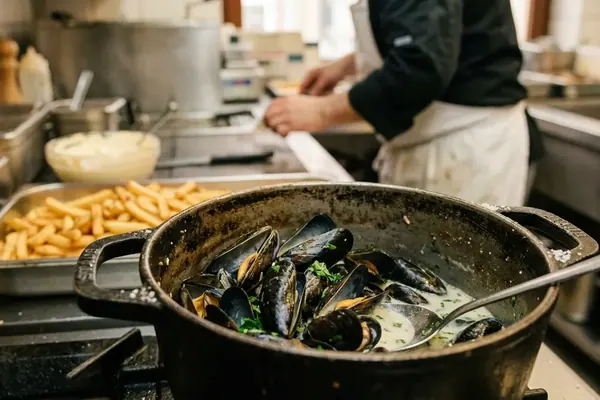
Remove the pot from the heat entirely before the final garnishing step. The residual heat of the heavy cast iron or stainless steel is sufficient to warm the herbs without dulling their color or destroying their delicate flavor compounds. Fold in 15 to 20 g of roughly chopped flat-leaf parsley. Add fresh lemon juice in small increments, starting with 5 ml and tasting before adding up to 10 ml. The wine and mussel liquor may already provide enough acidity, and too much lemon will destabilize the cream emulsion you just carefully built.
The side dish requires as much technical attention as the main event. Bintje potatoes possess the exact specific gravity and starch-to-water ratio required for a fluffy interior and a glass-like crust. Cut the potatoes into 10 to 12 mm batons. Fry them first at 150 to 160°C for 5 to 7 minutes to gelatinize the starches and cook the interior. Rest them on a wire rack for at least 10 minutes, allowing moisture to migrate from the center to the surface. Fry them a second time at 180 to 190°C for 2 to 3 minutes. This final blast of heat dehydrates the surface moisture into a crisp, deeply golden shell. Serve 300 to 400 g of raw potato weight per person.
Pour a Belgian Tripel into a stemmed glass at 6 to 8°C. A 250 to 330 ml serving provides high carbonation and slight bitterness, which effectively cleanses the palate between rich, creamy bites of the shellfish.
Thin, fast-food style fries lack the structural integrity to scoop up a heavy cream broth. They turn to mush upon contact with the liquid, ruining the textural contrast of the meal. You must serve Moules à la Crème with thick-cut, double-fried Bintje potatoes to ensure every bite retains the necessary crunch against the velvety sauce.




Comments
Start the discussion.
Join the Discussion