
Why Belgian Grey Shrimp Earn Their Place on the Plate
Crangon crangon is a small, grey-brown crustacean native to the North Sea, prized for sweet, earthy meat and a firm bite. In Belgian cuisine, its nickname, “North Sea caviar,” speaks to the value cooks place on that distinctive mouthful. The shrimp is small enough that preparing a dish can take longer than eating it.
Here is the practical verdict: buy Belgian grey shrimp when the cooked catch smells clean and briny, you understand the work behind the peeled weight, and you have a use for the shells. That last point changes the calculation. The meat can crown a cold tomate crevette or enrich a shrimp croquette; the heads and shells can give the croquette filling its deep seafood character.
Fishmongers commonly sell grey shrimp already cooked, either whole and shell-on or peeled. Check which form your recipe specifies before deciding how much to buy. A small batch of croquettes calling for roughly 100 g of peeled meat may call for a shopping allowance of 300–400 g of whole cooked shrimp. That is an allowance for planning, rather than a fixed yield from every purchase.
The price worth comparing is the price of usable shrimp meat, with the value of the shells considered separately.
This is where Brussels dining and home cooking meet. A fishmonger can save you the peeling; doing it yourself gives you the heads and shells for stock. Neither route improves a shrimp that has lost its fresh sea scent. Start at the counter, then decide how much preparation you want to take on.
What Oostduinkerke’s Horses Actually Harvest
At low tide in Oostduinkerke, Brabant draft horses walk through shallow coastal surf pulling funnel-shaped nets. The nets trail across the sandy bottom and disturb the grey shrimp sheltering there. The catch is brought ashore and sorted. Picture a horse working through water with a net behind it, rather than a boat towing fishing gear offshore.
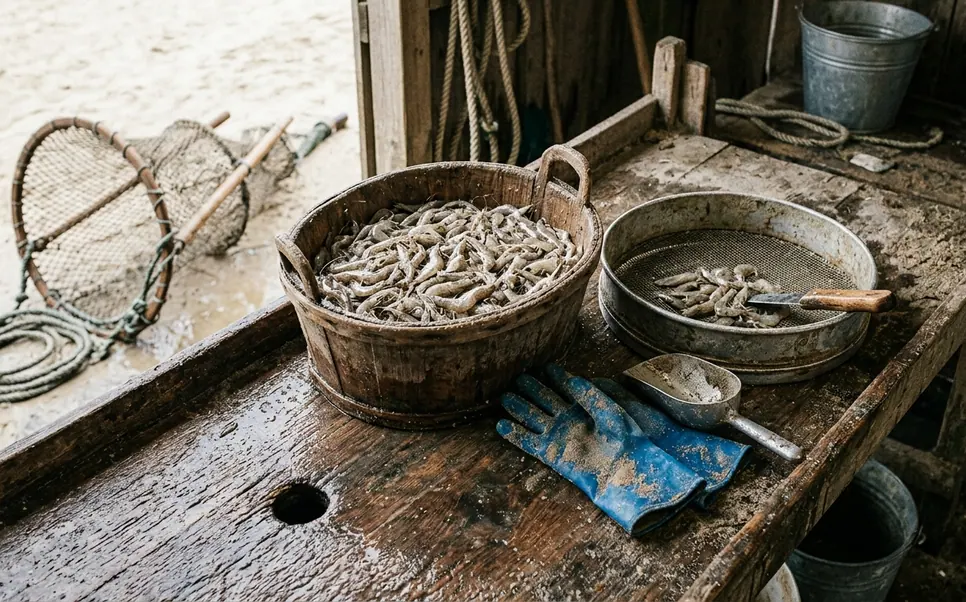
This horse-and-net practice has recognition as UNESCO Intangible Cultural Heritage. Its significance lies in a coastal skill kept alive at Oostduinkerke, where the shallow shore makes the method possible. The people handling the horses, nets and catch preserve a visible connection between a North Sea ingredient and the work of gathering it.
That heritage should stay in proportion to the shrimp on a Brussels fishmonger’s counter. Horseback harvesting is a localized, preserved craft; commercial grey shrimp generally come from trawlers. A menu invoking the horseback tradition may be telling a meaningful Belgian culinary story, but the story alone says nothing about how that particular serving was caught. Ask about the catch if its method matters to your choice.
The more immediate lesson from Oostduinkerke is physical. These shrimp live close to the sandy bottom, and harvesting them takes gear and handling suited to their size. By the time a Brussels cook receives them, the practical questions have shifted: when were they cooked, are they still in their shells, and what work remains before they reach the plate?
Reading the Shrimp Counter in Brussels
I settle the weight question before comparing prices. “Grey shrimp” on a label may mean whole cooked shrimp, with heads and shells included in the weight, or peeled meat ready for a recipe. If the recipe asks for somewhere around 100 g of peeled shrimp, buying 100 g whole leaves you short. For a small croquette batch, 300–400 g whole is a useful allowance for roughly 100 g of meat; the actual amount recovered depends on the shrimp and the peeling.
Check scent, surface and cooked colour
Cooked grey shrimp should have a mild, clean briny smell. Look for intact shells and a slightly translucent grey-pink hue. Reject shrimp that smell sour or ammonia-like, or feel slimy. These checks take little time at a fishmonger and tell you more about the shrimp in front of you than an evocative description on a sign.
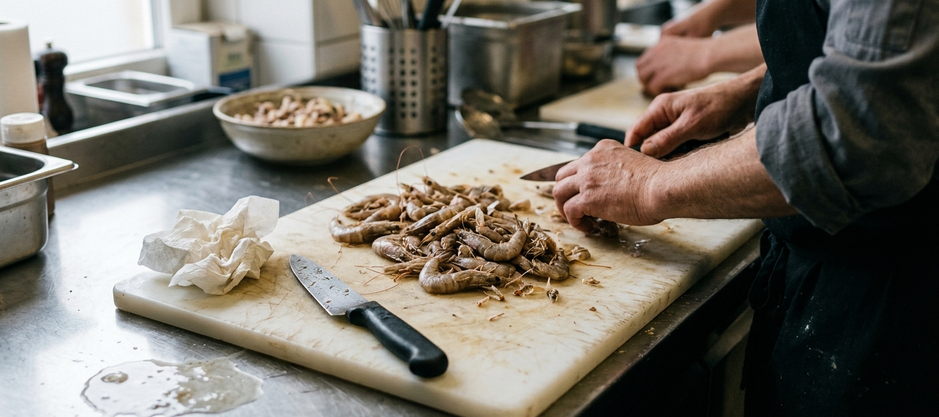
Ask when the shrimp were cooked, too. Keep purchased cooked shrimp at 0–4 °C and plan to use them within 24 hours of bringing them home for the preparations here. For tomate crevette, where the meat is served cold and lightly dressed, the shrimp’s own flavour remains especially exposed. A heavy hand with mayonnaise cannot restore a tired batch.
Ask where the peeling happened
North Sea catch location and peeling location are separate pieces of information. Commercially peeled grey shrimp may travel abroad for peeling before returning for sale. Locally hand-peeled shrimp are therefore a sought-after premium choice, with labour reflected in the price. Ask the seller where peeling took place rather than reading an answer into “North Sea” on the label.
Pre-peeled shrimp make sense when you need a measured quantity of meat and want to start cooking immediately. Whole shrimp offer a different bargain: you supply the careful handwork and keep the shells for stock. Compare those options against the dish you intend to make. Cold tomato filling chiefly needs appealing, intact meat; croquettes can put both the meat and the shell stock to work.
- Confirm whether the shrimp are cooked, whole or peeled.
- Check for a clean briny scent, intact shells and a non-slimy surface.
- Ask when they were cooked and, if peeled, where that work took place.
- Buy by the peeled-meat quantity your recipe needs, allowing for the weight lost from whole shrimp.
Peel the Meat, Then Put the Shells to Work
Peel one cooked shrimp slowly before trying to establish a rhythm. The meat is delicate, and squeezing harder makes extraction messier. Set out one bowl for peeled shrimp and another for heads and shells. Keeping those streams separate from the first shrimp makes the stock easy to start when you have finished.
The push, twist and pull motion
- Hold the shrimp’s body gently near the head. Push the tail shell slightly toward the head to loosen the shell segments.
- Twist off the head without crushing the body. Drop the head into the stock bowl.
- Grip the loosened shell and pull the exposed meat gently free. Put the meat in its own bowl and add the remaining shell to the heads.
The sequence matters more than speed. A small push frees the shell; the twist separates the head; the pull protects the firm little piece of meat you bought the shrimp for. If meat stays caught in a segment, ease the shell back rather than pinching the shrimp flat.
Expect substantially less peeled meat than the weight of whole shrimp on your receipt. That loss explains why hand-peeled grey shrimp command attention in professional kitchens and at the fishmonger. The shell bowl also explains why whole shrimp can be worthwhile at home: it contains flavour that a packet of peeled meat cannot supply to your croquette base.
Make a short shell stock
Warm the reserved heads and shells in a little butter for 1–2 minutes. Cover them with cold water, bring the pan to a gentle simmer, and strain after 15–20 minutes. The aim is an aromatic seafood stock for the filling, so keep the simmer gentle and take the time to strain it through a fine sieve. Shell fragments have no place in a smooth béchamel.
Set the peeled meat aside for the dish; it does not need to simmer with the shells. This small division of labour keeps the shrimp’s bite for the finished croquette while drawing flavour from parts that would otherwise be discarded. If you bought pre-peeled shrimp, account for the missing shells when planning your liquid: the shell-stock version described here depends on having them.
From Cold Tomate Crevette to Crisp Croquettes
Tomate crevette puts grey shrimp in plain view. Hollow medium tomatoes and drain them upside down for 10–15 minutes so their juices do not loosen the filling. For more or less two tomatoes, start with 100–150 g of peeled grey shrimp and 1–2 tablespoons of mayonnaise. Fold the cold shrimp through just enough mayonnaise to bind them, then fill the tomatoes shortly before serving.
The restraint is deliberate. The tomato brings freshness; the mayonnaise holds the shrimp together; the sweet, earthy meat remains the reason to order or make the dish. If you are choosing shrimp for a cold preparation at a Brussels counter, give scent and the condition of the peeled meat your full attention. There is little cooking between purchase and plate to change what you brought home.
Croquettes ask for a different use of the same catch. Their filling needs enough body to hold its shape, with shell stock carrying shrimp flavour through the béchamel. For a firm base, use around 60 g butter and 60 g flour with something like 400 ml total liquid, including the strained shell stock. Fold in approximately 150 g of peeled grey shrimp after building the thick sauce.
Cool the cooked filling and refrigerate it for 3–4 hours before shaping. Coat the croquettes, then fry at 175–180 °C until the outside is golden and the centre is hot. The wait in the refrigerator serves a clear purpose: a firm filling is easier to portion and coat, and it keeps its shape when it meets the hot oil.
The two dishes make different demands of your purchase. Tomate crevette rewards a fresh-tasting pile of cold, peeled shrimp with minimal dressing. Croquettes turn the labour of peeling into two ingredients: intact meat for the filling and strained stock for its base. Will you hand-peel the shrimp for your next batch of croquettes, or leave that work to a Brussels fishmonger?


Comments
Start the discussion.
Join the Discussion