
The Ghent Tradition in a Bowl
Damp cobbles shine outside a Ghent tavern on a cold evening. Behind steamed windows, the room is dim and warm, carrying the aroma of fish stock, butter, and leeks softened over a low flame. A bowl of fish waterzooi arrives almost ivory in colour, with neat vegetables suspended in the broth and generous pieces of fish just firm enough to hold beneath the spoon.
Three decisions govern that bowl: choose fish that remains intact during poaching, cut the vegetables into a uniform julienne, and temper the cream-and-yolk liaison without overheating it. Everything else supports those three points.
For four main-course portions, plan on 700–800 g of trimmed fish and roughly 1 litre of unsalted or lightly salted fish stock before reduction. That volume gives the fish room to poach and leaves enough broth to serve the dish generously without turning it into a thin soup.
Fish Came First
Chicken waterzooi is common today, yet fish is the original protein of this Ghent specialty. The fish version also explains the dish’s technique. Delicate flesh requires controlled heat, while a short stock made from bones gives the broth enough body to carry cream and yolks.
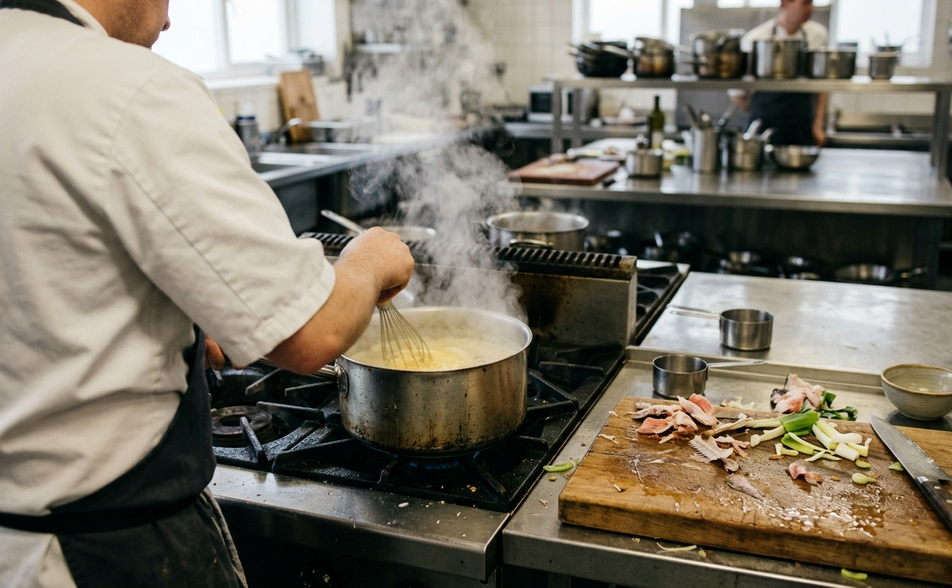
Waterzooi should reach the table as soon as the liaison enters the pot. A delay of 15–20 minutes allows the fish to keep cooking and takes the freshly emulsified quality out of the broth. Set the table, warm the bowls, and finish the sauce only when everyone is ready to eat.
Protect the Bowl
The clearest failure chain is easy to recognise: fragile fish fragments, browned leek julienne, then a boiled egg-yolk liaison. Control the fish, colour, and final temperature in that order.
Selecting and Prepping the Fish
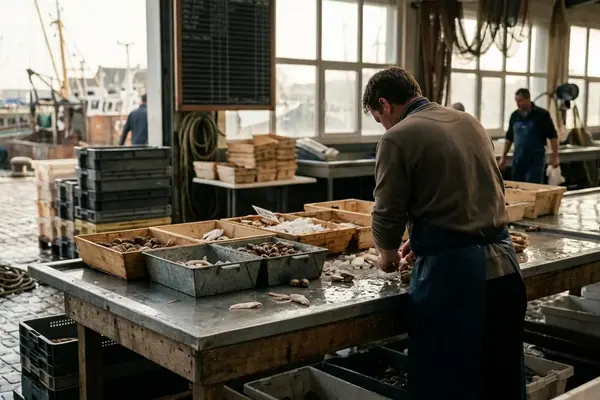
Choose fish by structure rather than familiarity or price. Turbot, halibut, monkfish, and carefully boned pike have the density to withstand gentle chunk-poaching. Thin sole, plaice, and other delicate flatfish fillets tend to break apart in this preparation, clouding the broth with flakes before they reach the bowl.
Match the Pieces Before Poaching
Run clean fingertips over the flesh and remove every pin bone. Then cut the skinless fish into pieces measuring approximately 4–5 cm and weighing about 70–90 g each. Matching pieces reach the same degree of doneness together, so the first portion does not overcook while a thicker piece remains translucent at its centre.
Keep the prepared fish refrigerated at 0–4°C until the broth is ready. Add it to broth held around 80–85°C and poach for 5–8 minutes, depending on thickness. Avoid stirring. A gentle movement of the pot is enough to circulate the liquid without damaging the fish.
The centre should appear opaque and separate under light pressure. Lift a test piece carefully with a slotted spoon rather than repeatedly probing every chunk.
A Short Stock With Clean Flavour
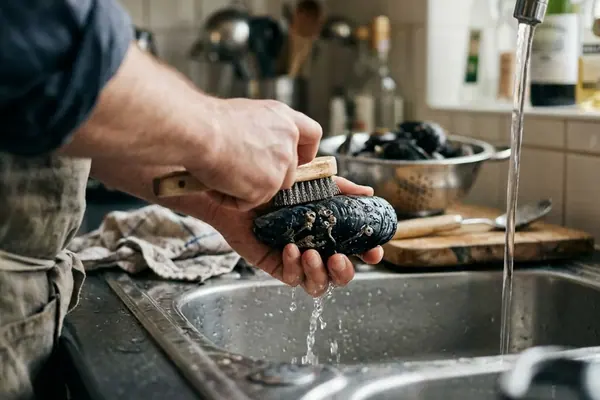
Ask the fishmonger to retain clean frames and heads. At home, remove the gills and any blood-darkened tissue; both can lend bitterness or a muddy character to a quick stock. Rinse the bones and heads under cold water before they enter the pot.
For the stock, combine about 1 kg of rinsed bones and heads with 1.5 litres of cold water, one sliced leek top, one celery stalk, parsley stems, and 6–8 peppercorns. Bring the temperature up slowly and skim away foam as it appears.
- Maintain a bare simmer for 25–30 minutes.
- Keep the surface calm; vigorous boiling disperses impurities through the liquid.
- Strain promptly once the stock has finished. Prolonged cooking can draw harsh flavours from the bones.
- Reserve roughly 1 litre for reduction and final assembly.
A useful stock has a clean marine aroma and slight body. Heavy seasoning at this stage makes the later reduction difficult to control, so begin with unsalted or lightly salted liquid.
Building the Aromatic Vegetable Base
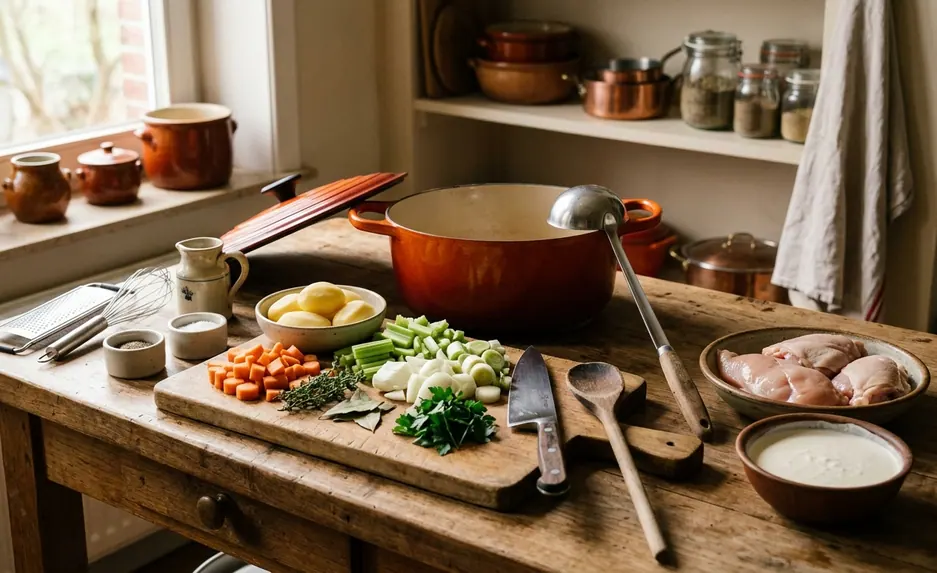
The classic vegetable profile is restrained: leek contributes sweetness, carrot brings gentle earthiness, and celery supplies savoury freshness. For four portions, use 150 g cleaned leek, 120 g carrot, and 100 g celery. An optional fennel addition should remain near 40–50 g so its anise character does not dominate the fish.
The Julienne Sets the Eating Texture
Cut every vegetable into strips approximately 4–5 cm long and 2 mm wide. This is functional knife work. Thick carrot stays firm after the leek has softened, while uneven celery creates coarse mouthfuls in an otherwise silky broth.
I line up a few finished strips beside the board as a visual gauge, especially when moving from soft leek to dense carrot. That simple reference keeps the whole batch close enough in size to finish during one sweat.
- Split and rinse the leek thoroughly, checking between the layers for grit.
- Square the carrot into manageable lengths before slicing thin sheets and then strips.
- Remove coarse celery strings when present, then match its width to the carrot.
- Cut optional fennel to the same dimensions as the core vegetables.
Sweat Without Colour
Melt 30 g unsalted butter in a heavy pot over low heat. Add the julienne with a small pinch of salt, cover, and sweat for 8–10 minutes. Stir gently once or twice, lifting from the bottom so the fine strips remain intact.
The vegetables are ready when the leek looks translucent and flexible. No browned edges or coloured butter solids should be visible. Browning would shift both the pale appearance and the mild flavour profile that distinguish fish waterzooi.
Keep It Ivory
If the butter begins to foam aggressively or the leek catches at the edge, lower the heat at once. The vegetables need moisture and time, not surface colour.
Mastering the Silky Broth and Liaison
Complete all reduction and seasoning before preparing the liaison. Once the yolks enter, boiling is finished. This sequence matters because further reduction would expose the enriched broth to the heat most likely to curdle it.
Reduce Before the Yolks Enter
Warm the strained stock and reduce it to roughly 750 ml of finished broth. Taste after reduction, then adjust the seasoning with restraint. The fish, buttered vegetables, cream, and serving accompaniments will all contribute to the final impression.
Poach the fish at 80–85°C, keeping the broth below an active simmer. When the pieces are opaque and just separate under light pressure, remove the pot from direct heat. The fish can remain in the broth while the liaison is tempered, provided it is handled gently and served promptly.
Temper Cream and Egg Yolks
Whisk 2 large egg yolks with 150 ml heavy cream until the mixture is completely homogeneous. Measure 150–200 ml of hot broth from the pot. Add the first 50 ml to the yolk mixture in a thin stream while whisking continuously, then incorporate the remainder more steadily.
This gradual addition raises the temperature of the yolks without producing isolated cooked particles. Return the warmed liaison to the pot off the heat and stir slowly through the broth, working around the fish instead of across it.
The finished waterzooi should remain near 75–80°C. It must not return to a simmer. The broth will gain a light, velvety body rather than the thickness of a cream sauce, and the vegetables should still move freely when ladled.
The Yolk Red Line
After the liaison enters, hold the ivory broth below 80°C and allow no second simmer. Direct bubbling can scramble the yolks and leave fine curds throughout the sauce.
If service slips briefly, place the pot over barely warm water for no more than 10 minutes. Stir once or twice without disturbing the fish. Longer holding weakens the texture of both the fish and the emulsion.
A Complete Weekend Waterzooi Execution
This service plan works backward from a 6:45 PM dinner. It keeps the stock work early, the julienne fresh, and the final 45 minutes focused on controlled cooking rather than frantic preparation.
Morning Purchase and Afternoon Stock
- 9:00–11:00 AM: Buy 700–800 g of trimmed turbot, halibut, monkfish, or boned pike, plus about 1 kg of usable frames and heads. The fish should feel cold and firm, smell clean, and travel separately from the bones. Transport everything chilled and refrigerate it immediately.
- 3:00 PM: Remove gills and dark tissue from the heads, rinse the bones, and combine them with 1.5 litres cold water, one leek top, one celery stalk, parsley stems, and 6–8 peppercorns.
- 3:05–3:35 PM: Bring the stock up slowly, skim the surface, and maintain a bare simmer. Strain it around 3:35 PM.
- 3:35–3:55 PM: Set the stock vessel in an ice-water bath for 15–20 minutes. Cover and refrigerate once cooled.
- 4:30 PM: Cut 150 g leek, 120 g carrot, and 100 g celery into a 4–5 cm by 2 mm julienne. Store the vegetables covered and chilled.
The Final Forty-Five Minutes
- 6:00 PM: Melt 30 g butter over low heat. Add the julienne and a small pinch of salt, cover, and sweat until the leek is translucent with no browning.
- 6:10 PM: Put 600–700 g of scrubbed new potatoes into salted water. In a separate pot, begin warming the strained fish stock and reduce it toward 750 ml.
- 6:20 PM: Check the fish for pin bones and cut it into matching 4–5 cm pieces. Set out 2 egg yolks, 150 ml heavy cream, a whisk, and a heatproof bowl.
- 6:25 PM: Bring the broth to 80–85°C. Add the fish and poach gently for 5–8 minutes without stirring. Fold the sweated julienne into the broth with minimal movement.
- 6:35 PM: Remove the pot from direct heat. Whisk the yolks and cream, then temper them with 150–200 ml hot broth, adding the first 50 ml in a thin stream. Stir the liaison back into the pot and keep the broth near 75–80°C.
- 6:40 PM: Fill four deep bowls with hot water. Drain the potatoes, add chopped parsley, and place them in a warm serving dish. Cut thick slices of crusty bread.
- 6:45 PM: Empty and dry the bowls. Divide the fish among them with a slotted spoon, arranging two or three intact pieces per serving. Ladle the pale broth and julienne over the fish. Carry the bowls straight to the table with the parsley potatoes and bread alongside, ready to soak up the last spoonful of broth.

Comments
Start the discussion.
Join the Discussion