
Read the Brussels Mussel Board in Two Passes
I read a mussel chalkboard twice: first for how the mussels grew, then for their size. That separates a useful dinner decision from a jumble of Dutch and French names. For a substantial, briny pot, choose Zeeland Imperial or Jumbo; for small, sweet bites in a light wine broth, choose bouchot; for an early-summer order, look for hangcultuur.
Menus often put cultivation terms and commercial grades side by side. Together, they describe the mussels on offer, but each answers a different question. Bodemcultuur means seabed cultivation, bouchot means cultivation on wooden stakes, and hangcultuur means suspended-rope cultivation. Imperial, Jumbo and Goudmerk describe shell-on size grades, measured by the number of whole mussels in a kilogram.
The blue mussel discussed here is Mytilus edulis. For background on the species and its cultivation, see the FAO cultured aquatic species profile for Mytilus edulis.
Why does a staple of Belgian cuisine arrive with Dutch or French growing terms? Belgium's domestic mussel farming is small beside the established supply chains serving Brussels. Dutch supply draws on the Wadden Sea and Oosterschelde; French bouchot mussels come from areas including Normandy and Brittany. The Belgian identity of the meal lies in its preparation and place at the table.
Zeeland Grades Count Shells, from Extra to Goudmerk
For the classic celery-and-onion cocotte, Zeeland mussels are a strong starting point. Their clean salinity and mineral finish give the cooking liquor its character. Open the pot and the appeal becomes obvious: substantial meats sitting above a broth largely supplied by the mussels themselves.
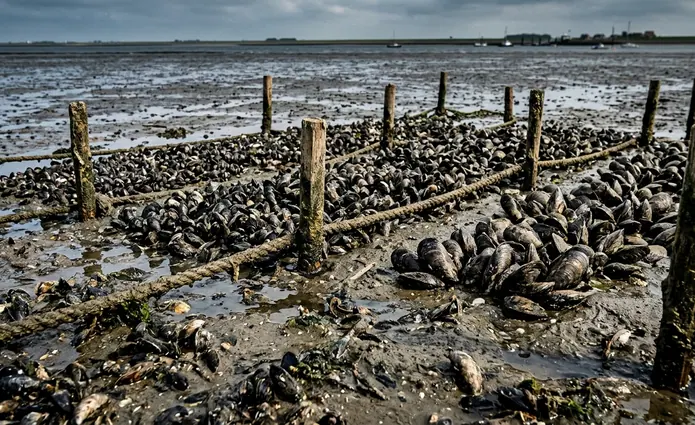
Dutch bottom-culture growers establish mussels on managed seabed plots, redistribute them during growth, and harvest them with dredges. Both the Wadden Sea and Oosterschelde belong in this picture. The Oosterschelde also plays an important role in conditioning and handling mussels before sale.
The Dutch Size Ladder on the Menu
These commonly used trading grades run from smaller to larger mussels. Read down the list and the shell count falls:
- Extra: 71–80 whole mussels per kilogram.
- Super: 61–70 per kilogram.
- Imperial: 51–60 per kilogram.
- Jumbo: 43–50 per kilogram.
- Goudmerk, or Gold Label: roughly 37–43 per kilogram.
A kilogram of Goudmerk therefore gives you fewer, larger individual mussels than a kilogram of Extra. That changes the rhythm of eating: bigger mouthfuls, fewer shells to work through.
Keep flesh condition separate from the grade. Feeding and reproductive condition affect how fully the meat occupies its shell. A large shell earns its place at the table when it opens to reveal a plump mussel. Pale-cream and orange meats both occur naturally; neither colour ranks freshness.
Bottom-grown mussels generally develop more robust shells than suspended-grown mussels. Shell strength says little about tenderness on the fork. I choose Imperial for a generous everyday pot and Goudmerk when I want the large individual bites to lead the meal.
Bouchot Stakes Produce a Different Kind of Mouthful
Along the intertidal coasts of Normandy and Brittany, growers wind mussel-seeded ropes around wooden stakes, traditionally oak or chestnut. These are the bouchots. Water covers the crop as the tide rises; exposure follows as it falls.
The mussels feed while submerged and close during exposure, retaining moisture until the water returns. Raising them above the bottom reduces contact with sediment and access for some crawling predators. The method creates a distinctly different growing environment from a managed seabed plot.
It also carries specific regional identities. Moules de bouchot de la Baie du Mont-Saint-Michel is a protected designation linked to a defined production area and specification. That name applies to the designated product, rather than to French stake-grown mussels generally.
At the table, expect smaller dark shells and compact yellow-to-orange meats. Their attraction is the succession of sweet little bites. Beside a Dutch Jumbo, a bouchot mussel feels like a different proposition: less of a single mouthful, more of a steady picking-through-the-pot pleasure.
Order bouchot marinière. Dry white wine and aromatics give those small meats room to register. A light nage works for the same reason. Heavy Roquefort or curry sauces take over the mouthful too easily; save that sort of weight for a larger mussel.
For recipes & prep at home, clean bouchot and rope-grown mussels carefully before cooking: growing above the seabed reduces sediment contact but does not guarantee grit-free interiors or barnacle-free shells.
Hangcultuur Earns Its Place on the June Menu
In June, the useful question for a Brussels waiter is straightforward: “Are these hangcultuur or bodemcultuur?” It tells you more about the crop than asking whether mussels are simply in season.
Hangcultuur keeps mussels suspended on ropes or in mesh sleeves in the water column, clear of the seabed. Unlike intertidal bouchot mussels, the crop stays submerged through the tidal cycle. Passing food-bearing water remains available while the mussels feed.
That continuous feeding opportunity can help the crop rebuild flesh after spring spawning ahead of the main bottom-grown supply. Dutch hanging-culture mussels commonly reach sale in late May or June, before the principal seabed season opens in July. Their early appearance has a biological explanation, rather than merely a marketing one.
The shells tend to be thinner and relatively smooth. Inside, the meat is tender, sometimes almost creamy in texture. This is an appealing early-summer pot in its own right.
At the stove, judge cooking by opening and flesh condition rather than assigning a fixed shortcut to the thinner shells. I keep the preparation light here. The pleasure is in the tender meat and its liquor, so a forceful sauce adds little to the reason for choosing hangcultuur.
Match the Crop to the Calendar, Then Order Nature
The old “months with an R” rule makes a poor guide to modern Brussels dining. July and August both sit inside the fresh-mussel season. For culinary travel, a crop-based calendar is much more useful than a spelling test.
- Late May or June: look for Dutch hangcultuur as the early-summer choice.
- From July through winter: main-crop Dutch seabed mussels become a central option.
- Late summer and autumn: bouchot offers a particularly appealing alternative for a smaller, sweeter bite.
Then match the preparation to the mouthful. Bouchot suits dry white wine and aromatics or a light nage. Substantial Zeeland Imperial or Goudmerk meats can carry garlic cream or gueuze beer, and their size also makes sense for half-shell gratins. Richness has its place when you actively want it.
What Moules Nature Brings to the Pot
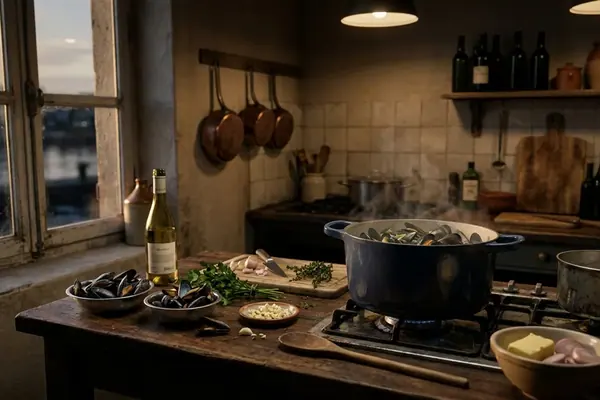
On a Brussels menu, moules nature generally means mussels cooked with onion and celery in the liquor they release. The vegetables supply an aromatic base; the mussels supply the saline broth. White wine belongs to other preparations and should not be assumed from the word nature.
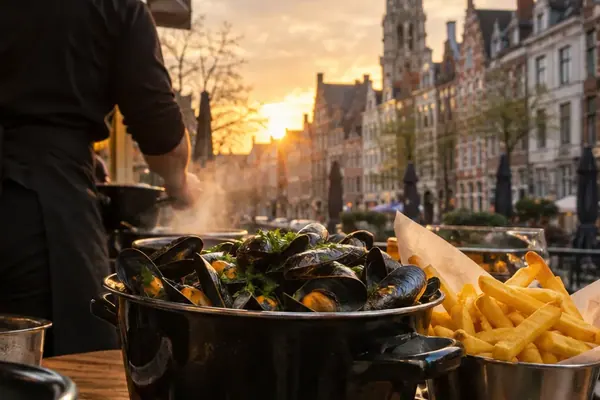
This is where the whole ordering exercise pays off. Growing method guides the seasonal choice, shell grade guides the size of the bite, and a restrained preparation lets you taste the crop you selected. Frites belong alongside, ready for the liquor left at the bottom.
If you have one mussel meal in Brussels between August and December, order Zeeland Goudmerk, or Imperial, strictly moules nature with frites. Pass on the novelty sauces and give that sweet, briny liquor the pot to itself.


Comments
Start the discussion.
Join the Discussion